The Plenary Powers Doctrine is Not a Blank Check

by Sudha Setty, professor of law and associate dean, Western New England University School of Law. Her book, National Security Secrecy: Comparative Effects on Democracy and the Rule of Law, was recently published by Cambridge University Press.

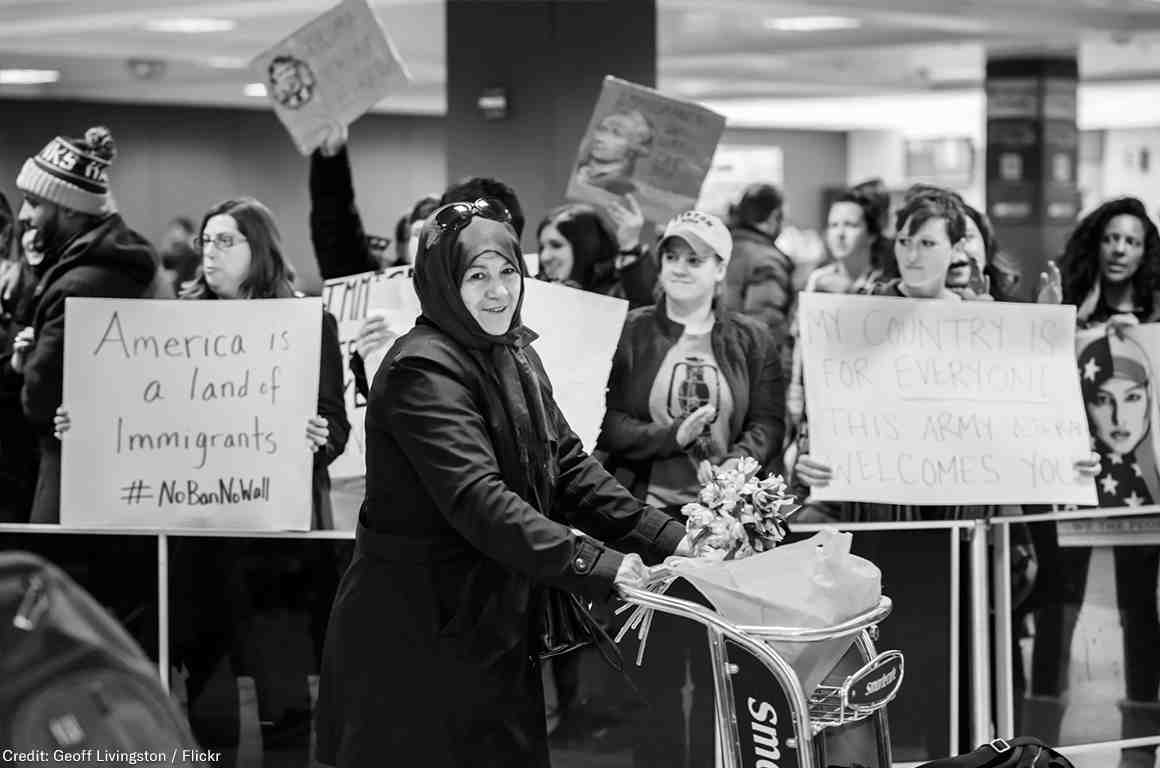
President Trump’s September 24 proclamation set forth immigration and entry restrictions that revised the restrictions in his January 27 and March 6 executive orders. In doing so, the administration attempted to reset the dispute over the extent of the president’s immigration and national security powers by claiming that the current administration policy was well-reasoned and the result of a lengthy deliberative process. The administration further argued that the new restrictions could not constitute a “Muslim ban” because North Korea and Venezuela, two of the eight nations included in the September 24 proclamation, are not Muslim-majority nations.

Now that a new order is in place, the Supreme Court has canceled the previously slated arguments as to the constitutionality of the March 6 order and has asked both sides to brief the question of whether the President’s September 24th proclamation has left the case moot. But answering the underlying question regarding the extent of the president’s plenary powers over immigration, particularly when national security matters are involved, is important because Trump administration lawyers argued, among other things, that when the president makes a decision regarding immigration and national security, that “should be the end of the matter.” They are wrong.  The Supreme Court must clarify what it has already established in various strands of constitutional jurisprudence: although the administration’s immigration and national security powers are broad, they are constitutionally limited, and the Trump administration’s actions go too far.

The Trump Administration has relied on a vision of immigration-related plenary powers first articulated in the 1889 case of Chae Chan Ping v. United States, which tested the constitutionality of the Chinese Exclusion Act.  That opinion referenced the pleas of white Californians to Congress to enact this law, including that “the presence of Chinese laborers had a baneful effect upon the material interests of the State, and upon public morals; that their immigration was in numbers approaching the character of an Oriental invasion, and was a menace to our civilization.” Ultimately, the Court rubber-stamped the animus-driven Chinese Exclusion Act as a valid exercise of Congress and the president’s plenary powers over immigration.

The Court also validated animus-based measures crafted in the name of national security for decades, most notably in the infamous 1944 decision of Korematsu v. United States, which upheld the executive order authorizing the exclusion and internment of over 100,000 people of Japanese descent, the majority of whom were U.S. citizens.  The Supreme Court in Korematsu noted that the Congress and executive had broad powers over matters of national security, and the Court’s job was to be deferential to those determinations.  In 1988, President Ronald Reagan signed the law that apologized and made reparations for the internment, noting that it was “carried out without adequate security reasons” and was motivated “largely by racial prejudice, wartime hysteria, and a failure of political leadership.”

The plenary powers doctrine still carries significant weight in immigration and national security matters, meaning that race-based policies with regard to immigration and national security can sometimes survive constitutional scrutiny.  But the days of the Court upholding government immigration policy based on explicit racism and ethnic stereotyping are long gone.  The Court has shifted in two important ways: it has shown far less tolerance for laws based on animus toward a particular nationality, religion, or ethnic group, and it has sometime been willing to question national security-related decisions of the President.

Korematsu is now rightfully viewed as part of the Court’s anti-canon: a cautionary tale illustrating what can happen when law is based in nativist fear, not a compelling national security concern coupled with thoughtfully-crafted policy.  Korematsu also serves a reminder to the Court of the dangers of too much judicial deference and inadequate questioning of policies that potentially violate human and civil rights.

In cases outside of the realm of immigration and national security, the Court has made clear that animus is irrational, and that a law based primarily on religious animosity will likely not stand, even if the four corners of the law or policy in question are facially neutral.

Together, these strands provide the basis for judicial skepticism toward all of President Trump’s travel bans, even though the March 6 and September 24 decisions were made under the auspices of the president’s plenary power with regard to immigration and national security, and even though those two orders do not, on their face, indicate animus toward Muslims.

The animus is real and obvious. President Trump made numerous public statements from his campaign onward as to his interest in creating a “Muslim ban.” Many of those problematic statements led courts around the country to enjoin the president’s initial travel-related executive order of January 27, 2017, barring nationals of various Muslim-majority countries from entering the country.  While that Order was on appeal, President Trump issued the March 6 Order, which revoked the original January 27 Order upon taking effect.  Several days later, as litigation over the March 6 Order was underway, President Trump lamented that the March 6 Order was simply a “watered down” version of the January 27 Order, and suggested that he would rather have the original order in place.  Soon before issuing the September 24 proclamation, while the White House made clear that a new travel ban was in the works, President Trump lamented that he would like to make a new ban “larger, tougher and more specific,” but could not because doing so would not be “politically correct.”

If the Court is willing to put together these pieces—blatant animus and the lack of sound national security justifications for these travel bans—it can reinforce its own jurisprudence and hold that the plenary powers doctrine is limited at the point where it enables unconstitutional action or threatens the rule of law.

It is not entirely clear that the Court is willing do this.  It has sent mixed messages since the September 11, 2001 terrorist attacks as to how much it will defer to the executive branch regarding national security, particularly in light of Congress’s vague and overly broad grant of authority in its Authorization for the Use of Military Force. This statute has served as the legal justification for everything from late 2001 U.S. bombing in Afghanistan to the ongoing U.S. military involvement in Syria.  On one hand, the Court pushed back in its post-September 11 habeas corpus cases against Bush administration arguments that once national security is invoked, the courts cannot impose constitutional constraints with regard to non-U.S. persons.  On the other hand, the Court has not seen fit to protect the constitutional rights of non-citizens in many other cases where national security concerns have been invoked.

Yet, at the very least, several post-September 11 cases show the Court’s willingness to refuse to rubber stamp the government’s position of “trust us, this is necessary for national security.” The Court must, at some point soon, take the opportunity to make clear that judicial review is an important element in maintaining the rule of law and democratic values, particularly when broad presidential authorities under the plenary powers doctrine are deployed as the justification for irrational and animus-laden decision making.


Protecting Local Progress


by Nestor M. Davidson, Albert A. Walsh Professor of Real Estate, Land Use and Property Law, Fordham Law School
 
 
Something has gone seriously awry in state-local relations. 
 
On February 22, 2016, the Charlotte City Council adopted an ordinance extending municipal non-discrimination protections to gay, lesbian, bisexual and transgender people, as scores of local governments have done.  Within a month, the North Carolina legislature was called into an extraordinary special session and in the space of a single day passed legislation through both houses that blocked Charlotte’s ordinance. North Carolina’s move understandably generated significant national outrage, but was only emblematic of a wave of preemptive state legislation targeting local governments that is becoming all too common. 
 
Across the country, cities are innovating to meet a host of pressing challenges—enacting minimum wage and paid sick leave legislation, expanding civil rights, protecting the environment, revolutionizing public health, welcoming immigrants, and pursuing many other policies that advance critical goals.  In response, state legislatures—not surprisingly, most notably in states with conservative state governments that are home to progressive cities—have been repeatedly shutting down avenues of local policymaking, preempting municipal act after municipal act, and moving to limit local authority more broadly. 
 
States, moreover, have begun to pass measures that not only block local democracy, but also seek to punish local governments—and individual local officials—for policy disagreements.  This past May, for example, Texas Governor Greg Abbott signed anti-sanctuary city legislation that not only sought to force local governments in the state to cooperate with federal immigration enforcement against their better judgment, but also threatened individual fines of up to $25,000 a day, removal from office, and even incarceration for local officials.
 
Fortunately, cities, local officials, advocacy groups, and citizens are responding to this troubling preemptive assault.  Despite the quite limited formal authority that local governments often possess in the face of state commands, litigation asserting a range of state and federal constitutional protections is growing.  Although the record is mixed, some of these claims—such as state constitutional bans against unfairly targeting local governments, constitutional constraints on state legislative procedure, and a variety of federal concerns—have found a receptive hearing from courts faced with clear state overreach. 
 
Indeed, in Texas just this past August, the small community of El Cenizo, nestled along the Rio Grande border, with a population of roughly 3,300, secured a preliminary injunction against the state’s anti-sanctuary city law on the eve of the law’s effective date.  A federal District Court found several constitutional infirmities in the statute, including First Amendment, Fourth Amendment, Due Process, and federal supremacy concerns. 
 
Protecting local progress in the face of state preemption is an uphill battle.  But the growing number of conflicts arising from the states and the increasingly punitive nature of state preemption are spurring creative advocacy.  Because it now falls to cities to take a leading role in advancing equity, inclusion, sustainability, and other critical priorities, finding and replicating instances of successful local advocacy and thinking anew about how appropriately to protect local democracy could not be more urgent.


Supreme Court should uphold working people’s fundamental rights in Murphy Oil


*This piece originally appeared on the EPI blog.

by Celine McNicholas, Labor Counsel, Economic Policy Institute

Today, EPI released a new paper by Cornell professor Alexander J.S. Colvin, which shows that more than half of all private sector non-union workers are currently subject to mandatory arbitration agreements—denying them access to the court system to resolve workplace disputes. Colvin also found that 41 percent of employees subject to mandatory arbitration also have waived their right to pursue work-related claims on a collective or class basis. Next week, the Supreme Court will consider whether arbitration agreements that include class and collective action waivers of all work-related claims are prohibited by the National Labor Relations Act (NLRA). The Court is scheduled to hear argument in National Labor Relations Board v. Murphy Oil USA (along with two other cases Ernst & Young LLP v. Morris and Epic Systems v. Lewis) on October 2.

The NLRA guarantees workers the right to stand together for “mutual aid and protection” when seeking to improve their wages and working conditions. Employer interference with this right is prohibited. However, as Colvin’s report shows, employers are increasingly requiring workers to sign arbitration agreements that force them to waive their rights to collective actions and instead handle all workplace disputes as individuals. In practice, that means that even if many workers faced the same type of dispute at work, each individual employee must hire their own lawyer, and must resolve their disputes out of court, behind closed doors, with only their employer and a private arbitrator.

The National Labor Relations Board (NLRB) first reviewed arbitration agreements with class and collective action waivers in D.R. Horton, Inc. (357 NLRB No. 184 (2012)) and found that these forced arbitration agreements interfere with workers’ right to engage in concerted activity for their mutual aid and protection, in violation of the NLRA. Corporate interests and the Trump administration—in a stark departure from the position taken by the Obama administration Department of Justice—are fighting the NLRB. They are focusing their argument on the Federal Arbitration Act (FAA), which requires courts to enforce arbitration agreements, subject to contract defenses. However, the Supreme Court has never enforced an arbitration agreement that violates another federal statute—as the arbitration agreements here violate the NLRA by requiring workers waive their fundamental right to join together to address workplace disputes. Still, that is what corporate interests arguing against the NLRB are asking the Court to do in this case. If they succeed, they will, as the NLRB argues in its brief, be using “private contracts to eviscerate the public rights Congress protected in the NLRA.”

Murphy Oil is a significant case for working people. If the Court sides with the Trump administration, workers could be required to waive our right to pursue workplace disputes on a collective or class basis, and instead we will be forced to individually arbitrate work-related claims. This is troubling, considering that employees who arbitrate grievances against their employer are much less likely to win than workers who file in federal court. Employees in arbitration win only about a fifth of the time (21.4 percent), whereas they win more than a third (36.4 percent) of the time in federal courtsAnd, when workers do prevail in arbitration, they are awarded far less in damages.

Workers depend on collective and class actions to enforce many workplace rights. Employment class actions have helped to combat race and sex discrimination and are fundamental to the enforcement of wage and hour standards. Without the ability to aggregate claims, it would be very difficult, if not impossible, for workers to find legal representation in these matters. This is particularly true for low-wage workers, whose cases are unlikely to involve large enough awards to attract attorneys to invest time in the case. That is the power of class and collective action suits: they let workers pool their claims, making it possible for an attorney to earn enough to make the case worth pursuing. And with class and collective action waivers in arbitration agreements, the arbitration process can only compensate an individual worker—rather than remedy systemic labor and employment violations experienced by many workers. Class and collective actions also help to identify and redress systemic violations of labor and employment protection. Court filings, unlike arbitration procedures, are public. Class action suits have served to draw attention to employer practices that violate worker protections and help the officials tasked with enforcing these laws develop targeted enforcement strategies that benefit all workers. Public awareness of these practices is critical to making sure we have policies that adequately protect workers.

In 1935, Congress recognized the importance of giving workers a collective voice in the workplace when it enacted the NLRA. The Supreme Court has the opportunity to uphold this fundamental right in Murphy Oil. If, however, the Court sides with corporate interests and the Trump administration, workers will likely be forced to sign away the long-held right to join together with their coworkers to address workplace disputes.


ACS’s State and Grassroots Work is Stronger Than Ever

by Belinda Macauley, ACS Vice President of Development and Senior Counsel

Without question, ACS’s work has never been more important than it is today. We believe in the rule of law and that the law should be a force to improve the lives of all people. President Trump and his administration, on the other hand, have shown incredible hostility – and often blatant disregard – toward our Constitution, our system of checks and balances, and our judiciary. ACS is standing up to these assaults by collaborating with coalition partners on policy solutions and mobilizing a progressive legal network on many fronts to fight back. Below are some highlights of our recent efforts.

Supporting State Attorneys General

As independent government officials, state attorneys general can mount serious challenges to administrative actions, federal laws, and even their own state’s laws. Given the current political environment and the many issues to be addressed beyond, state AGs are often the only state officials able to protect the interests of their constituents. They are uniquely positioned to confront the challenges posed by the Trump Administration and a Department of Justice that has already begun to abdicate many of its prior roles and responsibilities in protecting critical rights.

With that in mind, ACS is serving as a resource for state AGs, their staffs, and advocates. We are providing attorneys general offices strategies, best practices, resource allocation, leadership cultivation, and vital relationship building with community members, to maximize the effectiveness of their work on key issues, such as immigration, civil rights, labor rights, consumer protection, criminal justice, and redistricting. This project will continue beyond the Trump years because of the vital role that state attorneys general play in protecting and advancing core rights.

Protecting Voting Rights

ACS is also fighting back against the surge of onerous voting restrictions that disproportionately – and often intentionally – affect marginalized communities, particularly people of color, students, senior citizens, people with disabilities, and those who are low income. With an administration and Congress hostile to voting rights, litigation is one of the most promising remedies available to voters seeking to protect their right to vote.

Through the Voting Rights Institute, we provide intensive trainings for law students and practitioners on the enforcement of voting rights and election laws. We’ve already held 18 VRI trainings in cities across the country with more planned for later this year.

We also partnered with the Lawyers’ Committee for Civil Rights Under Law and Lawyers for Good Government to launch Election Watch, a nonpartisan program designed to ensure that at least one trained volunteer lawyer in every county in the U.S. is keeping tabs year-round on voting changes at the local level. Many of these volunteer lawyers are trained by our Voting Rights Institute. The goal is to proactively identify and fix voter suppression problems prior to elections.

Training Potential Candidates

For lawyers in the ACS network interested in running for elected office, we provide support and information on key areas such as building a support network, balancing work and running for office, staffing and managing a campaign, and fundraising.

To encourage participation, we regularly collaborate with other progressive organizations including our current partnership with the ACLU of Northern California to increase education on how prosecutors can be a stronger force for criminal justice reform. California was chosen because 56 of its 58 district attorney seats are up for election in 2018. We are holding a series of forums within legal communities across the state on the need for progressive prosecutors and how to run for office.

Mobilizing Our Network to Help Communities in Need

Our nationwide network – including more than 200 student and lawyer chapters – is a powerful asset for organizations who seek to connect lawyers and students to individuals and communities in need. Since the election, hundreds of members from across the country have volunteered to help with pro bono projects, including the following:

·       Veteran reimbursement - Volunteers helped veterans in numerous states apply for loan forgiveness or reimbursement through the U.S. Department of Education’s remediation program that many feared would be eliminated by the Trump Administration.

·       Detention and deportation – Volunteers helped draft motions and acquire court files for the San Francisco Public Defender’s Office, which formed the Deportation Defense Unit soon after the Trump Administration initiated widespread detentions and deportations of non-citizens living in the U.S. Volunteer attorneys who speak foreign languages also assisted travelers detained at airports in the aftermath of Trump’s original Muslim ban in January.

·       Voting - We are coordinating with Spread the Vote to organize Voter ID Clinics in targeted states to pair voters who need state IDs with attorneys who can help them obtain the necessary documentation. Currently, we are working to get our Virginia-based student chapters involved in clinics in anticipation of the state’s elections in November. Efforts are being expanded to other states. 
 

In addition, ACS supports groups working on the forefront of these issues. For example, we helped a national advocacy organization that focuses on afterschool programs provide an informational webinar to its members’ staff regarding immigration enforcement in schools and how they can best assist the families they serve.  

Growing Our Network – Expanding Our Reach

ACS has more than 200 student and lawyer chapters located in almost every state and on most law school campuses, and we’re continuing to grow. Since the election, we’ve added lawyer chapters in Knoxville, Las Vegas, Philadelphia, Cincinnati, Athens (GA), and three in Missouri – as well as 18 new student chapters.  

If you haven’t yet joined an ACS chapter, visit ACSLaw.org/chapters to locate and connect with your nearest chapter – or email LCemails@acslaw.org to start a chapter in your area. More than ever, we need your support to continue our fight!

You can take action by making a special tax-deductible donation to help ACS continue to channel the renewed energy of progressives across the country and mobilize them to action.

By growing our nationwide network and expanding our reach – and by furthering our efforts at the state and grassroots levels – we are establishing a powerful and formidable counterforce in this current political climate. We have a very large “to do” list – but too much is at stake for us to back down.

It’s National Voter Registration Day. Do Your Part.

by Joshua A. Douglas, law professor, University of Kentucky College of Law

The Constitution can save us. Yes, the same document that gave us the Electoral College, unfettered presidential pardons, and deadlock in Congress can be our democracy’s savior – but only if we as a society actively embrace it through political participation. That means registering to vote and exercising the franchise.

September 17 was Constitution Day, a nationwide celebration of our founding document. September 26 is National Voter Registration Day. These two days should cause all Americans to acknowledge the fundamental role that the Constitution and political participation plays to the foundation of our democracy. We all need to double down in our efforts to protect those sacred rights. And it need not require huge efforts or a ton of work: simply reminding your neighbor to register to vote can have a big impact.

In 2004, Senator Robert Byrd of Virginia – who was known for carrying a copy of the Constitution around with him in his pocket – promoted a provision of federal law that designates September 17 as an annual celebration of the Constitution and requires public schools and governmental offices to provide educational programs about the Constitution.

These educational programs are needed now more than ever. According to the University of Pennsylvania’s Annenberg Public Policy Center, in a recent survey, over one-third of Americans could not name any rights contained with the First Amendment, and only a quarter of Americans could name all three branches of government. Yet better education on these basic facts is vital if we are to overcome the current political environment. Americans need to understand how their government works and how to exercise their constitutional rights vigorously.

Various organizations are already doing great work on this front. The American Constitution Society runs a program called Constitution in Classroom, in which lawyers and law students visit primary and secondary schools across the country. The Constitution Center has various resources available. Colleges and universities all had programming. Go read the Constitution yourself. It’s only 7,591 words.

Yet just learning about the Constitution is not enough. We need to actively participate in our democracy, and that starts with voting. We seem to accept less than 60% turnout in our presidential elections, and far lower turnout in state and local elections, as perfectly normal. But the U.S. turnout rate is depressingly low, especially as compared to most other developed countries.

We can do better. We must do better. And that starts with registering to vote. There is little reason to wait until an election is upon us to exercise our democratic muscles. Use National Voter Registration Day to ensure your own registration is up-to-date, and then find a neighbor or friend to encourage as well. No one should be cut out of the process come Election Day simply because he or she did not register to vote in time.

National Voter Registration Day is also a good time to reflect upon the success of Oregon and other states in enacting automatic voter registration. Under this innovative system, states have the obligation to register voters using information in existing databases, such as the state’s Department of Motor Vehicles. Individuals can then “opt-out” of voter registration if they wish. Oregon found that automatic voter registration increased turnoutin the 2016 election significantly. Currently ten states and the District of Columbia have adopted automatic voter registration. More states should join the mix.

If we are truly going to sustain our democracy, particularly in these perilous times, then we need a better understanding of the Constitution and its principles. We need to foster a society that values robust civic education. We desperately need to increase voter turnout and engagement.

Only then will we be able to achieve, as the Constitution’s preamble desires, a “more perfect Union.”

By the way, the three branches of government that the Constitution creates are the legislative (Congress), executive (presidency), and judicial (the courts), and the First Amendment protects the right to freedom of religion, free speech, freedom of the press, freedom of assembly, and the ability to petition the government for a redress of grievances. Go use those, and other constitutional rights, to advocate for a democratic society of which you can be proud.

42 Constitution in the Classroom Volunteers, nearly 2,000 Students Nationwide

by Zinelle October, vice president of Network Advancement at the American Constitution Society

This year, our Constitution in the Classroom (CITC) program’s curriculum focused on the First Amendment and its foundational rights: the freedoms of speech and press, assembly and petition, and religious freedom. We are proud to announce that we had 42 volunteers who taught nearly 2,000 students across the country.

This accomplishment could have not come at a better time.

President Trump has callously attacked the principles of our Constitution throughout his presidency. As law professors and former U.S. Attorney, Barb McQuade wrote, “Wherever you turn these days, it seems that someone is attacking the cornerstones of our democracy, such as freedom of the press, freedom of speech and fair and open election. These threats make our Constitution more important than ever.”

But as Patrick Kibbe posed in his blog, “Do we the people understand and appreciate the importance of the Constitution?”

A recent study by the Annenberg Public Policy Center at the University of Pennsylvania found that most people do not have a firm understanding of the Constitution. This study reminds us why constitutional literacy is needed and why the CITC program is so important. If students do not understand the rights afforded by the Constitution, then it is impossible for them to value and protect it.

Our volunteers did a phenomenal job addressing constitutional literacy. Here are just a few highlights:

Kevin Golembiewski volunteered at his alma mater, Nease High School in Ponte Vedra Beach, Fla.  He taught six classes in one day to over 500 students by himself.

Steven Bynum taught 230 fifth and sixth-graders in Bakersfield, Calif. Bynum went the extra mile by coming up with a Constitution gameshow to test his students’ knowledge after their lesson. 

Patrick Kibbe taught third- and fifth-graders at Addison-Hyde Elementary school in Washington, DC. Students examined the significance of the 1969 case, Tinker v. Des Moines, and had fun applying the case to current events – by asking questions like, “Is the Women’s March or the Black Lives Matter Movement an example of freedom of speech?”

We do not have to wait until next Constitution Day to bring the founding principles of our nation into local schools. You can volunteer any time in your local schools. View our Constitution Day 2017 page for resources, pictures, events, and blogs from this year’s 230th anniversary.