Seila Law v. Consumer Financial Protection Bureau: Score One for The Unitary Executive Theory

In SEILA LAW v. CONSUMER FINANCIAL PROTECTION BUREAU, No. 19-7, the Supreme Court, in an opinion written by Chief Justice John Roberts, held that the restrictions on the power of the President to remove the director of the CFPB are unconstitutional.  The outcome, including the 5-4 vote on the merits, was expected, and was a major victory for those who support the “unitary executive theory” of the Constitution under which Congress has very limited powers to check the President over federal agencies.  As the same time, with only Justices Clarence Thomas and Neil Gorsuch dissenting, the Court held that the unconstitutional limits on removal were severable from the rest of the law, so that the CFPB will continue to operate, but with the director subject to removal at will by the President.

The battle on the merits can be briefly, if somewhat unfairly, described as a difference in understanding of how the Constitution allocates power over the various departments and agencies that Congress creates.  Supporters of the Unitary Executive, which include The Chief Justice, Justices Samuel Alito, and Brett Kavanaugh, as well Justices Thomas and Gorsuch, contend that the Framers intended that the President have wide-ranging control over the officers in the executive branch that wield significant power, which includes the power to fire those officers at will, unlike the statute that created the CFPB, under which the director could only be removed for “inefficiency, neglect of duty, or malfeasance in office.”  On the other hand, Justice Elena Kagan, writing for herself and Justices Ruth Bader Ginsburg, Stephen Breyer, and Sonia Sotomayor, concluded that the Constitution allows the political branches to enact laws creating various degrees of agency independence and presidential control and that the Constitution would invalidate restrictions on removal only when the law applied to officers like the Secretary of State and the Secretary of Defense, who directly advise and assist the President in carrying out his constitutional functions.

The 20 pages that the Chief Justice devoted to the merits and the 39 pages of the dissent both examined the same constitutional history, reviewed the so-called Decision of 1789, in which the First Congress grappled with the issue of removal and ultimately did not decide it, the history of federal agencies in which Congress imposed removal conditions on the President, and a series of cases dating back to 1926, in which the Court had ruled on a variety of manifestations of the removal issue. Despite the common data base, the two opinions fundamentally disagreed over whether the default position favors the President or the Congress, with the President prevailing here, where the agency is headed by a single director, instead of a multi-member body, like the Federal Trade Commission, whose identical removal restrictions were upheld in Humphrey’s Executor v. United States, 295 U. S. 602 (1935).  The Court declined “to extend these precedents to a new configuration: an independent agency that wields significant executive power and is run by a single individual who cannot be removed by the President unless certain statutory criteria are met.”  There is nether time nor space to reprise that debate, except to note that in my view the dissent has the better of the argument.  Before discussing the certainty of future litigation over the restrictions on at will removal under the statutes governing many other agencies, as well as the impact of the severability ruling in this case, a few words are in order on the justiciability issues that the Chief Justice (but not the dissent) addressed.

Before reaching the merits, the Chief Justice responded to several arguments made by the Court-appointed amicus (Paul Clement), the House of Representatives (which defended the law, while the Senate sat on the sidelines), and me in my amicus brief.  I will discuss only two: standing and lack of a case or controversy.  The petitioner is a private law firm that refused to comply with the CFPB’s demand for information relating to its debt collection practices. When it was sued, among its defenses was that the law under which the demand was made was unconstitutional because the President could not fire the director of the CFPB at will – even though neither the President when the demand was made, nor the current President, had ever attempted to fire either the prior or current director.  In response to the defense of a lack of standing, the law firm alleged no more than it had the right to have an agency whose head was accountable to the President, but made no showing of any further injury, nor did it explain what the connection might be between the injury to the President and a right to refuse to respond to the CFPB’s information demand.

In rejecting the standing objection, the majority cited several cases including Free Enterprise Fund v. Public Company Accounting Oversight Board and Morrison v. Olson in which a private party had objected to similar restrictions on removal and the Court had decided those cases on the merits.  However, in none of those cases was the standing issue raised, let alone directly decided.  In addition, in all of those cases, there was also a challenge to the method by which the officers in question were appointed, which explains why the standing issue may not have been raised.  I continue to believe that the Seila firm had no standing to raise a claim of injury to the interests of the President and that the decision to the contrary is inconsistent with the Court’s generally very stringent standing decisions, mostly recently in Thole v. U.S. Bank, N.A. No,17-1712 June 1, 2020.  See also Alan B. Morrison, Standing Is Jurisdictional Requirement – Unless the Government Wants the Merits Decided.  Indeed, the same day that this case was decided, Justices Thomas and Gorsuch, in separate dissenting opinions in June Medical Services LLC. v. Russo, No, 18-1323, concluded that abortion facilities lacked standing to sue to protect the ability of their patients to obtain an abortion without undue restrictions.

Going forward, the standing ruling is going to be quite significant.  Although the holding in Seila Law applies only to the CFPB, there is much in the Chief Justice’s opinion that would support its application to the FTC and the many other agencies – ranging from the National Labor Relations Board, to the Federal Communications Commission, to the Federal Election Commission, and the Federal Reserve Board, all of whom have more than one member and all of whom have restrictions on removal.   Indeed, the opinion of Justice Thomas, in which Justice Gorsuch concurred, took the next step:

But with today’s decision, the Court has repudiated almost every aspect of Humphrey’s Executor. In a future case, I would repudiate what is left of this erroneous precedent.  Concurring opinion at 1.

To be sure, there are plenty of quotes from the Chief Justice’s opinion that would support limiting it to agencies with a single head, and the four dissenters would surely join in that result.  I do not seek to predict how such a challenge would come out, but I can confidently predict that there will be multiple challenges to adverse decisions of every one of these agencies with removal limitations and they can – as Seila Law did – raise them in every case because the standing requirement has been effectively eliminated.  Indeed, a lawyer who failed to raise the issue might well be guilty of malpractice.

There is a possible way out of these agencies having to defend their removal restrictions on the merits.   In the final section of his opinion, the Chief Justice held that the unconstitutional removal restrictions did not bring down the whole CFPB statute with it.  Opinion 30-36. If it had, petitioner would have been entitled to have the proceeding dismissed, which is what Justices Thomas and Gorsuch would have done. Concurring Opinion at 24: ‘I would resolve this case by simply denying the CFPB’s petition to enforce the civil investigative demand.”  Suppose in the next case in which this issue is raised, the agency argues, pointing to the final section of the Chief Justice’s opinion, and also to the many years that Congress has supported this agency. It would then argue that, even if the removal restrictions are unconstitutional, they are severable and therefore the plaintiff will gain nothing from the ruling on the removal issue, and there is no need for the court to rule on the constitutional question.[1]

The other justiciability argument was that there was no case or controversy because the petitioner and the CFPB agreed that the removal restrictions are unconstitutional.  The Court attempted to cure this by the appointment of an amicus to defend the statute.  The issue was whether this eliminated the problem, and the majority agreed that the Court had succeeded.  Opinion at 10-11.  For that conclusion it found support in United States v. Windsor, 570 U. S. 744 (2013), in which the House of Representatives as amicus supported the Defense of Marriage Act which the Obama Administration declined to defend, just as the Trump Administration refused to defend the CFPB law here.  The Chief Justice failed to note that he joined the dissent of Justice Antonin Scalia (with Justice Thomas) that would have dismissed that case for want of jurisdiction, id. at 778, or that only Justice Alito found the presence of an amicus to be decisive there.  Id. at 803-807.

In addition, if the petition in Windsor had been dismissed, it would have been almost impossible for another case to make it to the Court as long as the United States agreed that DOMA was unconstitutional.  Coupled with the fact that DOMA impacted over 1100 statutes in all three branches of the federal government, the prudential considerations were very much in favor of deciding the issue then, as the Court observed.  Id. at 759-763.  But in this case, there would be no impediment to having the constitutionality of the removal restrictions adjudicated.  All this President (or any future President) would have to do is fire the director, and if a lawsuit followed, the Court could decide the case in a true adversary context.  In fact, this President had ten months to fire Richard Cordray, the former director, but he did not do so. This is not an argument that a presidential firing is necessarily the only way for this issue to be decided, but only that there was no reason to reach out to decide a constitutional issue when the parties did not disagree and when principles of constitutional avoidance pushed in the opposite direction.

There is, of course, another way beyond a lawsuit like this that could bring to the fore the issue of how far this ruling extends.  The President could simply start firing officials on multi-member bodies whose rulings or policies he dislikes, perhaps beginning with the chair of the Federal Reserve, whom the President believes is implementing policies that are not sufficiently favorable to his re-election.  To date, he has been told that such a firing is unauthorized, but after today, even a cautious lawyer would have to agree that the issue is unsettled. And if such a firing took place, and the chairman sued to keep his job and/or for back pay, it would be just one more lawsuit that might not be resolved until this President is no longer in office.

In a prior case, this Administration took the position that administrative law judges at the SEC could also be removed at will, but the Court declined to reach that issue.  Lucia v. SEC, 138 S. Ct. 2044, 2050 n. 1 (2018).  That issue is certain to surface again, either by an attempt to remove an ALJ, without cause, or by a challenge similar to that in this case.  In addition, the majority noted that the Social Security Administration now has a single administrator with for-cause removal protections, although it suggested that the agency may perform functions that may distinguish it from the CFPB. Opinion at 20.  Given all the disgruntled applicants for disability benefits, this looks like another fertile ground for litigation.

Finally, there is a small irony in this victory for this President.  If he loses his re-election bid, his successor will be able to remove the CFPB director immediately, instead of having to wait until 2023 when the incumbent’s five-year term will be over.  But for those who believe that the Constitution does not preclude Congress from having the right to decide that some agencies should have some measure of independence from the President in order to carry out their statutory mandates, Seila Law is a potentially huge setback, depending on whether the Court limits it to agencies with a single director, like the CFPB, or extends it broadly by overruling Humphrey’s Executor.

 Mr. Morrison is the Lerner Family Associate Dean for Public Interest & Public Service Law at George Washington University Law School, where he teaches civil procedure and constitutional law.  He filed an amicus brief in the Seila law case, arguing that the Court should not reach the merits of the constitutional issue presented.

[1] It is arguable that the ability of an agency to succeed on this approach depends on a subsequent ratification by an officer who is subject to at will removal, which had been made in Seila Law, but which is not likely to be available in future cases.

DACA: The Supreme Court’s Glance Over a Glaring Equal Protection Problem

David is a third-year law student at the Indiana University Maurer School of Law and previously served in the Obama Administration at the White House and U.S. Department of Homeland Security.

Many people will remember where they were on Thursday, June 18, 2020, when they received the news about the fate of DACA—the program that grants lawful presence and work authorization for two-year increments to undocumented individuals who arrived in the United States as minors. That day, the Supreme Court ruled 5-4 that the Trump administration’s method of rescinding the program was unlawful under the Administrative Procedure Act[1]. But while DACA recipients across the nation rejoiced because they were temporarily safe, there was still an abysmal feeling that lingered; the Court flat out rejected the merits of the DACA recipients’ equal protection claim.

I worked at United States Citizenship and Immigration Services (USCIS), the agency that administers DACA, during the Obama Administration—and I saw how much joy the program brought DACA recipients. But at the same time, the politicization of the program made these individuals carry on through life with a measured optimism because they knew the program’s destiny rested in the hands of whoever occupied the White House. Near the end of President Obama’s last term, there were about 700,000 people enrolled in the program—and all 700,0000 had reason to fear for the program’s fortune under the incoming Trump administration. Their fears were valid. On September 5, 2017, then-Attorney General Jeff Sessions announced the end of DACA as they knew it.

While last week’s victory saved the program, for now, I am unsatisfied with the Court’s view that the termination of the program did not violate the Equal Protection Clause. The majority allocated three pages out the 74-page opinion to the DACA recipients’ equal protection argument—which, I believe, spoke volumes of the majority’s obliviousness to the hard reality that President Trump’s immigration policy is discriminatory, or as Justice Sotomayor stated in her dissent, “contaminated by impermissible discriminatory animus.”[2] The underlying strategy of this administration’s immigration policy has been to create an immigration system that discriminates based on national origin instead of one that welcomes those who wish to contribute to the fabric of the United States—and the decision to end DACA was a key part of this plan.

The Court laid out a simple rule to successfully plead animus: “a plaintiff must raise a plausible inference that an ‘invidious discriminatory purpose was a motivating factor’ in the relevant decision.”[3] The plurality refused to conclude that discrimination played a role in the administration’s decision to end DACA[4]. The DACA recipients alleged, and to no avail, that animus towards them was “evidenced by (1) the disparate impact of the rescission on Latinos from Mexico, who represent 78% of DACA recipients; (2) the unusual history behind the rescission; and (3) pre- and post-election statements by President Trump.”[5]

First, the majority argued that the rescission did not have disparate impact on Latinos from Mexico because “Latinos make up a large share of the unauthorized alien population, [and] one would expect them to make up an outsized share of recipients of any cross-cutting immigration relief program.”[6] I disagree. As Justice Sotomayor stated in her dissent the “executive decision disproportionately harm[ed] the same racial group that the President branded as less desirable mere months earlier.” Further, it is true Latinos from Mexico make up a large portion of the undocumented community in the United States, about 10.5 million people[7] , but this does not make them impervious to discrimination. This population of people has felt the brunt of President Trump’s hostile immigration agenda—family separation at the U.S.-Mexico border, remain in Mexico policy, increased Immigration and Customs Enforcement (ICE) presence in majority Latino neighborhoods, and explicit verbal attacks from the President, to name a few. So, placing a spotlight on the sheer number of Latinos distracts from the point that they still experience unfavorable, disparate treatment irrespective of how many of them are in the United States.

Second, there was an unusual history behind the rescission of DACA—and it does not take an expert political observer to notice. The Court’s majority concluded that the termination of DACA “was a natural response”[8] based on the administration’s interpretation of a similar program’s, Deferred Action for Parents of Americans (DAPA), legal defects. And Justice Sotomayor retorted that “[t]he abrupt change in position plausibly suggests that something other than questions about the legality of DACA motivated the rescission decision.”[9] I agree. If one puts the DACA rescission within context of the of President Trump’s immigration actions, there is an overt trend: a clear intent on limiting immigration from destitute countries with majority black and brown immigrants. For example, for pure political reasons, the administration unsuccessfully attempted to end[10] Temporary Protected Status (TPS) for Haiti, El Salvador, and Honduras. If successful, this action would have facilitated the deportation of 400,000 TPS recipients who sought refuge in the United States from dire country conditions like earthquakes and hurricanes. Additionally, the implementation of the new public charge rule was devised to disqualify low-income immigrants who use public benefits—like SNAP and Medicaid—from obtaining permanent status in the United States. And the planned termination of DACA was meant to aid a campaign promise[11] to remove a large portion of Mexican nationals from the United States. Thus, taken the administration’s immigration agenda altogether, the ending of DACA fit squarely within the plan to curtail immigration from specified individuals instead of a “natural response to a newly identified problem.”

Last, if the Court needed a smoking gun for “contemporary statements”[12] that displayed the President’s animus towards immigrants, there were plenty to choose from. And if any of his immigration acts were legitimate, they were clouded by his past remarks. As Justice Sotomayor said, the majority should not have “disregard[ed] any of the campaign statements as remote in time from later-enacted policies.”[13] Throughout his presidential campaign announcement speech, then-candidate Donald Trump proclaimed that he would “make America great again”[14] by ushering in reforms that would curb immigration from Mexico. In regard to legal Mexican migration, President Trump stated: “They're sending people that have lots of problems . . . they're bringing drugs . . . they're bringing crime . . . they're rapists.”[15] And his widely-known public remark, “Why do we have these people from all these sh*thole countries here? We should have more people from places like Norway,”[16] should have put the majority on notice that he favored an immigration system that discriminates based on national origin. But that is not all. During the President’s past remarks on U.S. Mexico border policy, he exclaimed, “You wouldn’t believe how bad these people are. These aren’t people, these are animals, and we’re taking them out of the country at a level and at a rate that’s never happened before.”[17] These statements show his clear pattern of thinking that some immigrants are not worthy to come to the United States, and the administration should use its capabilities to remove them. The majority had a laundry list of statements from President Trump that showed a clear inference of discriminatory motive.

Even with a great result last week, the Court’s blind eye to motivations behind President Trump’s immigration agenda is cause for concern. The Supreme Court’s failure to realize that the Trump administration’s attempt to phase out DACA was motivated by animus rather than a valid national interest will cast a permanent blemish on the Court’s legacy. Chief Justice Roberts famously stated: “The way to stop discrimination on the basis of race is to stop discriminating on the basis of race.”[18] But this can never be true if the Court continues to sanction blatant discriminatory acts that embolden government officials to diminish opportunities for people because of their national origin.

[1] Dep't of Homeland Sec. v. Regents of the Univ. of California, No. 18–587 (S. Ct. June 18, 2020).

[2] Dep't of Homeland Sec. v. Regents of the Univ. of California, No. 18–587 (S. Ct. June 18, 2020).

[3] Dep't of Homeland Sec. v. Regents of the Univ. of California, No. 18–587 (S. Ct. June 18, 2020). (quoting Arlington Heights v. Metropolitan Housing Development Corp., 429 U. S. 252, 266 (1977).

[4] Dep't of Homeland Sec. v. Regents of the Univ. of California, No. 18–587 (S. Ct. June 18, 2020).

[5] Dep't of Homeland Sec. v. Regents of the Univ. of California, No. 18–587 (S. Ct. June 18, 2020).

[6] Dep't of Homeland Sec. v. Regents of the Univ. of California, No. 18–587 (S. Ct. June 18, 2020).

[7] https://www.brookings.edu/policy2020/votervital/how-many-undocumented-immigrants-are-in-th.e-united-states-and-who-are-they/

[8] Dep't of Homeland Sec. v. Regents of the Univ. of California, No. 18–587 (S. Ct. June 18, 2020).

[9] Dep't of Homeland Sec. v. Regents of the Univ. of California, No. 18–587 (S. Ct. June 18, 2020).

[10] https://www.nbcnews.com/news/latino/trump-s-timing-ending-tps-immigrant-protections-was-tied-2020-n1078751

[11] https://time.com/3923128/donald-trump-announcement-speech/

[12] Dep't of Homeland Sec. v. Regents of the Univ. of California, No. 18–587 (S. Ct. June 18, 2020).

[13] Dep't of Homeland Sec. v. Regents of the Univ. of California, No. 18–587 (S. Ct. June 18, 2020).

[14] https://time.com/3923128/donald-trump-announcement-speech/

[15] https://time.com/3923128/donald-trump-announcement-speech/

[16] https://www.vox.com/2018/1/11/16880750/trump-immigrants-shithole-countries-norway

[17] https://www.nytimes.com/2018/05/16/us/politics/trump-undocumented-immigrants-animals.html

[18] Dep't of Homeland Sec. v. Regents of the Univ. of California, No. 18–587 (S. Ct. June 18, 2020).

June Medical Is the New Casey

The atmosphere awaiting the Supreme Court’s decision in Planned Parenthood v. Casey felt similar to the one awaiting today’s decision in June Medical Services v. Russo.  At stake was whether the U.S. Constitution would continue to protect a woman’s right to abortion. Casey reaffirmed that right but lowered the level of protection. June Medical does the same. In fact, Casey is likely to be the controlling Supreme Court precedent on abortion once again.

To understand what this means, let me provide a brief background on abortion and the Supreme Court.  As most people realize, the Supreme Court declared that the right to abortion was a fundamental right in Roe v. Wade. Roe also required strict scrutiny of any abortion regulation, where regulations of first trimester abortion (when the vast majority of abortions occur) were presumptively unconstitutional.

What many do not realize is that the Supreme Court subsequently dialed back the level of protection in Planned Parenthood v. Casey (1992). In a 5-4 decision, the Supreme Court reaffirmed that abortion was still a constitutional right. However, the Court replaced the strict scrutiny test with the undue burden test, making abortion much easier to regulate.  According to the Casey Court, as long as a law did not impose an “undue burden” on women seeking an abortion, it was fine.  An undue burden occurs when the state places a substantial obstacle in the path of a woman hoping to end her pregnancy. Unfortunately, the Supreme Court in Casey and subsequent cases made clear their view that very few regulations impose an undue burden. Waiting periods? No undue burden.  Outlawing a safer procedure? No undue burden.  Under the Casey regime, states were able to severely restrict access to abortion by passing laws ostensibly to protect women’s health, but in reality undermined it by making abortion more expensive, time-consuming, and difficult to obtain due to clinic closures.

Quite unexpectedly, in Whole Woman’s Health v. Hellerstedt (2016), the Supreme Court strengthened the undue burden test, providing heightened protection for abortion rights. The analysis of whether a law imposed an undue burden now had two questions instead of one. As before, courts must consider whether a law created a substantial obstacle in the path of a women seeking an abortion.  But in addition, the Court would consider the actual benefit of the law. If the stated goal was to improve women’s health, states must provide evidence to that effect. This is critical because, as mentioned above, states regularly passed laws which they claimed were to make abortion safer for women but were really designed to just make it harder. (These laws even have a nickname--TRAP laws: Targeted Regulation of Abortion Providers.)

Take the law at issue in Whole Women’s Health, which required that abortion providers have admitting privileges at hospitals within thirty miles of their clinic. By forcing over half the abortion clinics to shut their doors, this law (which also required clinics to meet the standard for ambulatory surgical centers) created a serious obstacle for women seeking abortions. At the same time, Texas offered zero evidence that mandating admitting privileges at nearby hospitals had made any woman safer. To start, abortion was such a safe procedure, hospitals were almost never required.  On the rare occasion the need did arise, it was usually when women were already back home, which meant they would go to the hospital near them, not a hospital near the clinic. Moreover, doctors who performed abortions were already required to have a patient “transfer” arrangement with a physician with admitting privileges if they did not have admitting privileges themselves.

Louisiana passed the same requirement, and it was Louisiana’s admitting privileges law that was at issue in June Medical—and struck down in June Medical. In doing so, June Medical reaffirmed that women’s right to abortion was protected by the U.S. Constitution, just as in Casey. There is no doubt a great relief to women and reproductive rights advocate everywhere.

However, also similar to Casey, June Medical signals less protection for abortion rights going forward. Although Justice Breyer’s plurality opinion relied on the highly protective undue burden test as formulated by the Whole Woman’s Health majority, which requires examination of both the actual benefit of the law, as well as the burden imposed by the law, Chief Justice Roberts did not.  Chief Justice Roberts, who provides the crucial fifth vote to reaffirm that abortion was a constitutionally protected right, repudiates the Whole Woman’s Health test. Instead, he wrote that “the only question for a court is whether a law has the ‘effect of placing a substantial obstacle in the path of a woman seeking an abortion of a nonviable fetus.’” In other words, the test for whether an abortion regulation violates the constitution is the Casey test with one question, not two. Thus, like Casey, June Medical reaffirms abortion is a constitutional right while cutting back protection for abortion.

The Chief Justice’s invocation of stare decisis leads to both good news and bad news. Applying it to Louisiana’s admitting privileges law required the Court to strike it down. Applying it to Whole Woman’s Health, however, led Chief Justice to reject its heightened protection for abortion rights. “Under principles of stare decision, I agree with the plurality that the determination in Whole Woman’s Health that Texas’s law imposed a substantial burden requires the same determinations about Louisiana’s law. Under those same principles, I would adhere to the holding in Casey, requiring a substantial obstacle before striking down an abortion regulation.”

Black Lives Matter to Obergefell

The authors are the co-authors of the forthcoming Marriage Equality: From Outlaws to In-Laws (Yale Press July/Aug. 2020).

On June 26, 2015, five years ago today, the Supreme Court held in Obergefell v. Hodges that the Fourteenth Amendment requires states to recognize marriage equality for LGBTQ+ persons. The vast literature celebrating Obergefell omits an important element of the narrative: Black Lives were critical to achieving marriage equality in America. In persuasively exposing and protesting police brutality against Black and Indigenous people of color, the Black Lives Matter movement has awakened the nation to structural racism in America. That includes the erasure and minimization of Black influence in other social and legal movements.

African Americans were plaintiffs in Obergefell—indeed, the first federal challenge to a same-sex marriage exclusion was brought 44 years earlier by two Black women, Donna Burkett and Manonia Evans. In subsequent marriage equality litigation, Black Judges Mattered. Among those key judicial voices were Massachusetts Supreme Court Justice Roderick Ireland and federal Judges Jerome Holmes (Tenth Circuit), Roger Gregory (Fourth Circuit), and Arenda Wright Allen (Eastern District of Virginia).

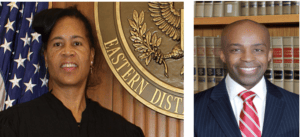
L-R: Hon. Arenda Wright Allen (Eastern District of Virginia), Alphonso David (Counsel to Governor)

Black Leaders Mattered. Alphonso David, then a senior advisor to the governor, was the critical figure in the 2011 victory of marriage equality in New York. Gary Daffin was co-chair of the Gay and Lesbian Political Caucus that saved marriage equality from political override in Massachusetts. President Barack Obama, working closely with Advisor Valerie Jarrett and Attorney General Eric Holder, sunk the Defense of Marriage Act, which had been the butt of vigorous attack from Representative John Lewis in 1996.

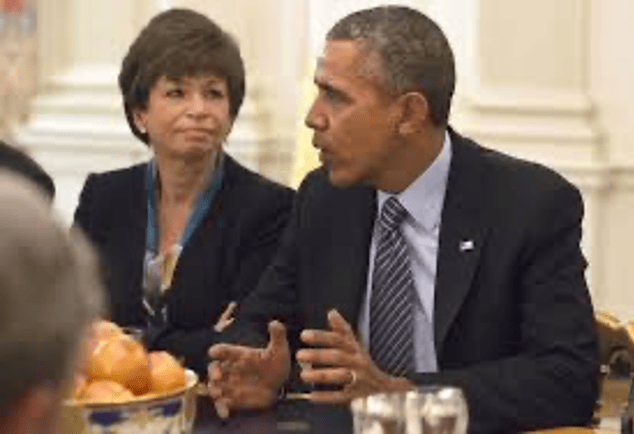
President Obama with Senior Advisor, Valerie Jarrett

NAACP leaders such as Julian Bond, Roslyn Brock, and Benjamin Jealous supported freedom for LGBTQ+ persons to marry. Indeed, marriage equality activists were inspired by the NAACP’s triumph in Loving v. Virginia, invalidating state bars to different-race marriages. Civil rights leaders and Inc. Fund attorneys pioneered the law reform model that LGBTQ+ activists followed.

Black Ideas Mattered. Constitutional lawsuits challenged the interconnected series of race-segregating laws known as apartheid—but the legal arm of the civil rights movement depended on the political arms to persuade Americans that skin color ought not be the basis for any legal disadvantage or segregation and that racial variation is natural and benign. Inspired by this normative vision, early “homosexual rights” activists claimed that sexual and gender variation was no less natural and benign and that the Constitution tolerates no exclusion or disadvantage based upon one’s sex-based identity. Just as the civil rights movement secured a constitutional transformation in the status and rights of African Americans between 1954 and 1967, the marriage equality movement secured a constitutional transformation in the status and rights of LGBTQ+ Americans between 1996 and 2015.


Outlaw Regime  Tolerance Regime In-law Regime
Colored”/”Perverts”
Are “Degenerate”
“Negroes”/”Homosexuals”
Are “Different”
Black Is Beautiful
Gay Is Good
Trans Is Terrific
Sex/Race Variation
Is Malignant
Sex/Race Variation
Is Tolerable
Sexual/Gender/Racial
Variation Is Productive
Apartheid (Segregation)
Outlaws (Sodomy etc.)
Desegregation
Decriminalization
 Anti-Discrimination,
Integration & In-Laws


Outlaw Regime Colored”/”Perverts”
Are “Degenerate”
Sex/Race Variation
Is Malignant
Apartheid (Segregation)
Outlaws (Sodomy etc.)
Tolerance Regime “Negroes”/”Homosexuals”
Are “Different”
Sex/Race Variation
Is Tolerable
Desegregation
Decriminalization
In-law Regime Black Is Beautiful
Gay Is Good
Trans Is Terrific
Sexual/Gender/Racial
Variation Is Productive
 Anti-Discrimination,
Integration & In-Laws

Additionally, Obergefell Matters to Americans of all races, sexes, ethnicities, and orientations—but less-advantaged Americans have not benefitted from the decision as much as they would benefit from other reforms. Drawing from the detailed treatment in our book, From Outlaws to In-Laws, we suggest some consequences for the decision.

1. The Importance of Same-Sex Marriage—Yet the Perseverance of Alternate Institutions.

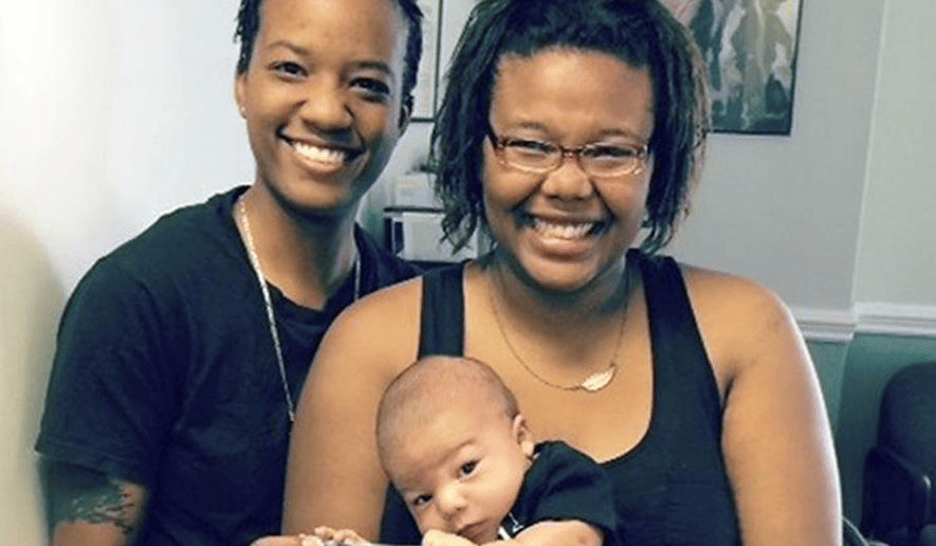
Obergefell was a valentine to marriage as an institution of commitment and child-rearing, and as many as half a million LGBTQ+ persons have found the path to civil marriage opened by the marriage equality movement. Like Obergefell plaintiffs Brittani Henry and Brittni Rogers, many such couples are raising children. Critics’ predictions that expanding marriage would spell doom for marriage as an institution have not borne out. After a freefall in marriage rates between 1980 and 2004, civil marriage stabilized in Massachusetts after marriage equality, and in the country as a whole since 2011.

Obergefell plaintiffs Brittni Rogers and Brittani Henry

The importance of marital commitment to another person “in sickness and in health” is more important than ever during the COVID-19 pandemic. (The earlier AIDS epidemic helped jump-start the marriage equality movement.)  When someone becomes ill, it is often her/his/their spouse that is able to provide care, as most COVID-19 patients rest and recover within their homes.

Yet many less-advantaged Americans do not marry. Critics rightly complain that marriage equality has left many people/families behind, but nonmarital institutions responding to gay people’s demands for relationship support, such as domestic partnerships, have survived Obergefell. Thus, Colorado in 2009 established designated beneficiaries” for unmarried couples who wanted to take responsibility for one another’s well-being and health. Although most Colorado couples have preferred marriage, the availability of this institution is important in times of pandemic, and we urge more states to consider adopting such a law.

2. More Equal Treatment of Sex and Gender Minorities—Yet Obergefell Remains in Peril

Just as Loving helped entrench the norm that racial variation ought not be the basis for discrimination, so Obergefell advanced the norm that sexual and gender variation ought not be the basis for discrimination. Indeed, in Bostock v. Clayton County, Georgia, the Roberts Court ruled that Title VII’s bar to workplace sex discrimination protects sexual and gender minorities. The prevailing argument was one suggested by analogy with Loving and that the Justices first encountered in the marriage cases: if barring a white man from marrying a black woman is race discrimination, then barring a man from marrying a man is sex discrimination.

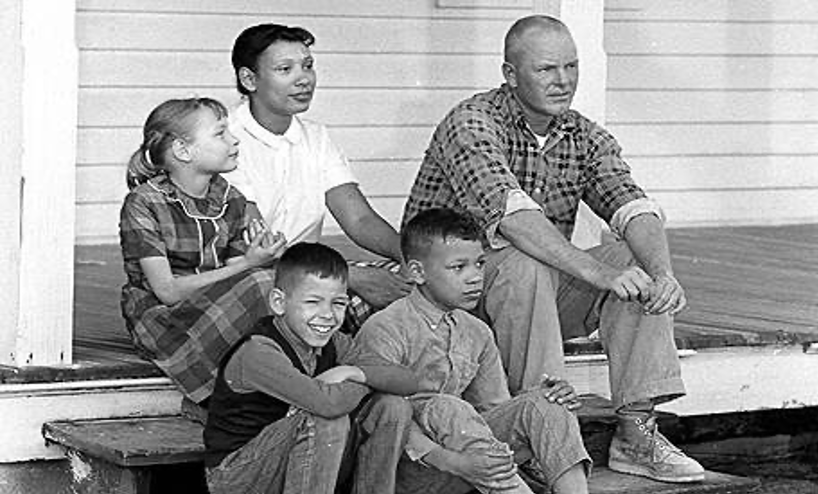
The Loving Family

Yet even after Obergefell, LGBTQ+ persons have faced obstacles to equal treatment on matters of matrimony. Thus, the Supreme Court in Pavan v. Smith (2017) ruled that Arkansas’s refusal to record both lesbian spouses on a birth certificate violated Obergefell’s commitment to give same-sex couples the same “constellation of benefits that the States have linked to marriage.” Indeed, Obergefell explicitly held that Ohio had to include both male spouses on the birth certificate of the son they were adopting. That three Justices (Thomas, Alito, and Gorsuch) dissented in Pavan, a result required by stare decisis, suggests that there were in 2017 three votes to narrow, ignore, or overrule Obergefell.

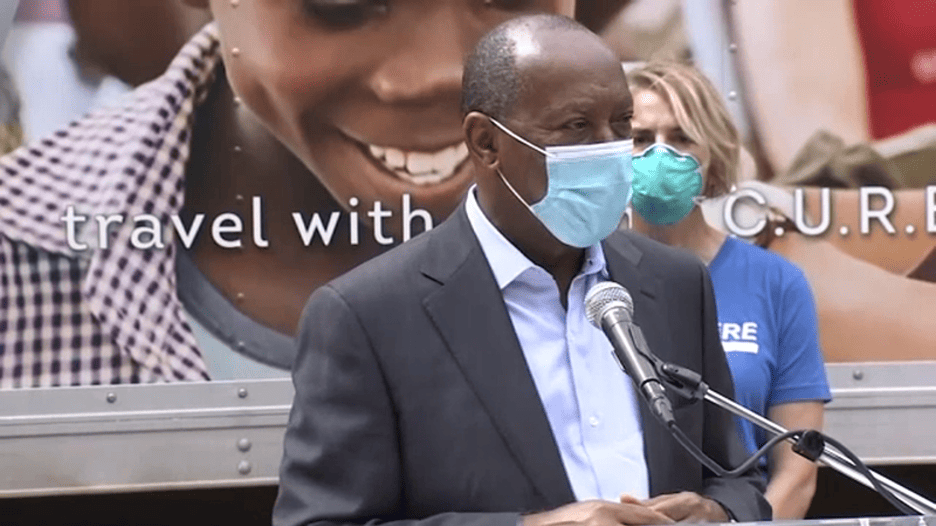
In Pidgeon v. Turner, a trial judge rebuffed challenges to Houston Mayor Sylvester Turner’s order for spousal benefits to municipal employees in valid same-sex marriages. In the wake of GOP outrage, the Texas Supreme Court vacated the ruling and remanded for a reconsideration of how seriously to read Obergefell. Notwithstanding Pavan, the court said that Obergefell “did not hold that states must provide the same publicly funded benefits to all married persons.”

Houston Mayor Sylvester Turner

For a federal example, the immigration code provides that a child of a married couple is an American citizen if either spouse is a citizen and has resided for a period of time in the United States. Like Arkansas, the Trump Administration has rewritten the statute to deny citizenship to the child of a married same-sex couple where the citizen is not the biological parent. On the eve of Bostock, the Trump HHS revoked an Obama HHS rule assuring sex and gender minorities protection under the Affordable Care Act’s bar to sex discrimination in health care. Like the immigration discrimination, this issue should end up in federal court.

3. Evolution of Religion—Yet Liberty-Equality Clashes Loom

Episcopalians, Reform Jews, Quakers, Congregationalists, and many Presbyterians, Lutherans, Methodists, and Evangelicals have embraced marriage equality. Even traditionalist denominations such as the Catholic Church and the Church of Jesus Christ have rejected previous pronouncements that treated sexual and gender variation as malignant and have advocated tolerance for these minorities.

Same-sex marriage is affecting American religions, primarily as a result of pressure from its membership rather than from the government.

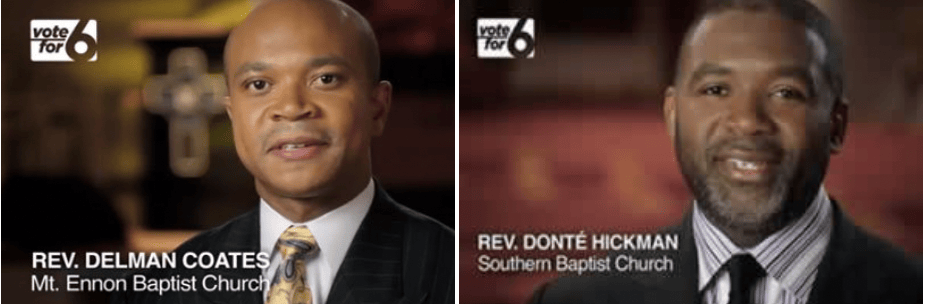
Ironically, both the Southern Baptist Convention, which was slow to condemn apartheid, and Black Baptist churches, which were on the front lines of the civil rights movement, have moved most cautiously. Yet an increasing number of Baptists, such as Reverend Delman Coates and Bishop Donté Hickman, have supported civil marriage equality based upon their study of Scripture.

Nonetheless, same-sex marriages have opened up new sources of conflict between religious liberty and LGBTQ+ equality. Sharonell Fulton, a foster mother in Philadelphia, is suing the city for terminating its foster care contracts with Catholic Services, which will not place with married same-sex couples. Fulton and Catholic Services argue that the government is bullying them to take actions inconsistent with their faith, hence violating the Free Exercise Clause. The Court will hear their case in the 2020 Term, and there will surely be sequels.  Our view is that state and national legislators ought to work with both religious and gay rights advocates to codify Bostock and devise appropriate religious allowances that address liberty-equality clashes. Reflecting a similar impulse, the Civil Rights Act of 1964 (with religious allowances) was an essential complement to constitutional victories in court.

Plaintiff Sharonell Fulton

Labor Secretary Scalia Wrongly Rejects Federal Role in Enforcing Unemployment Rights of Workers Who Refuse Unsafe Work

This commentary was cross-published on the NELP Blog.

Background

The COVID-19 pandemic has laid bare the structural challenges that have plagued the nation’s unemployment insurance (UI) system for decades. Reduced federal funding starved the program of the resources needed to upgrade its antiquated IT infrastructure, causing state systems to slow to a crawl and crash amid the unprecedented volume of claims over the last three months. After the Great Recession, many states slashed UI to the point where only one in four unemployed workers (27 percent, a record low) received UI last year. With the nation’s unemployment rate now well above the highest levels reached during the last recession, and far higher still for Black and Latinx and other workers of color, the stakes are greater than ever to achieve lasting reform of the UI program.

COVID-19 is having an especially devastating impact on communities of color, disproportionately claiming the lives of Black, Latinx, and Indigenous people at rates far higher than for white people, and causing far more layoffs of those employed in the service sector and other jobs that cannot be done from home and that do not offer paid sick leave or other benefits. According to a recent New York Times survey, Black workers are twice as likely as white workers to report losing their jobs because of the crisis. A recent Somos survey of Latinx families found that 35 percent reported losing their jobs in response to the COVID-19 pandemic, while 46 percent reported taking a pay cut. As a result, Black, Latinx, and Indigenous workers will likely be required by their employers to return to work at higher rates than white workers, while having far less financial security to exercise their right to refuse an offer of work if it poses a serious health and safety threat due to COVID-19.

The current economic crisis offers a unique opportunity to collectively reflect on the vital role of the UI program, its compelling history, and the need to continue expanding its reach. Born out of the New Deal, the federal-state UI program was created by the Social Security Act of 1935, which was championed by President Franklin Delano Roosevelt and Frances Perkins, the nation’s first woman Cabinet member and the first female U.S. labor secretary. For all its historical significance, however, it must be acknowledged that the New Deal shamefully excluded from its protections the country’s domestic and agricultural workers, who were predominantly Black women and workers of color. As the U.S. confronts the current crisis, policymakers must ensure that as many workers who need it can access the help of the UI program.

A Legal Right to Refuse Dangerous Work

As more states move to reopen their economies, millions of workers who were forced out of work and have been receiving unemployment insurance are now being called back to work. Many, however, are justifiably concerned about returning to work in unsafe conditions that could expose them, their families, and the broader public to COVID-19. Were it not for a key provision of the federal UI law, today’s unemployed workers would be left without any viable recourse to refuse unsafe work.

Specifically, for workers receiving regular state UI, the federal “prevailing conditions of work” provision governs “work rules, including health and safety rules” (emphasis added) and situations where there has been an intervening change in the conditions of work, such as COVID-19. In fact, the “prevailing conditions of work” statute was the only standard relating to benefits rights included in the Social Security Act. It was also key to creation of the federal-state UI system because it provided assurance to the labor movement against the possibility that the compulsory nature of UI “might be used to break unions or weaken labor standards.” Absent this provision, which also allows workers to reject a position that is vacant due to a labor dispute, workers would be disqualified from receiving UI for refusing work that degrades the labor standards in their community.

What’s needed is strong enforcement of the federal law. Unfortunately, that enforcement has been conspicuously lacking. In fact, the U.S. Department of Labor (DOL) recently issued guidance that “strongly encourages” state UI agencies to push employers to report workers who fail to return to work—so that the workers can be disqualified from further receiving UI. In separate letters sent to U.S. Labor Secretary Eugene Scalia—one signed by more than 200 organizations and another signed by 22 U.S. Senators—supporters of workers’ rights urged the DOL to honor and enforce this critical provision of federal UI law that applies to workers who are confronted with health and safety concerns when called back to work in the context of COVID-19.

But when questioned repeatedly by Democrats at a recent hearing of the Senate Finance Committee, Secretary Scalia “abdicat[ed] his responsibility to keep workers safe by not providing guidance to states about when workers can turn down jobs in unsafe conditions and continue to receive unemployment benefits,” according to the ranking member, Senator Ron Wyden (D-OR). After failing to respond in writing to the letters referenced above, Secretary Scalia passed the buck in his testimony, claiming that it’s a matter for the states to regulate, not the federal government (“The requirement is that it be suitable work—suitable work has to be safe. And so the states are to judge that.”). Secretary Scalia’s testimony, however, flies in the face of the history of the Social Security Act, which sets the federal floor for the states to follow in order to maintain labor standards for all workers. This was also the intent behind the Fair Labor Standards Act and other federal labor laws passed in response to the Great Depression.

To their credit, several states have recently clarified how their “suitable work” laws apply to further protect workers receiving unemployment insurance from being forced to accept unsafe work. In Colorado, for example, the governor issued an executive order requiring the state UI agency to issue new COVID-19 guidelines. While Colorado employers have reported that more than 1,000 workers have not returned to work when recalled, 85 percent were allowed to continue receiving UI mostly because they or a household member were considered immunocompromised, or because adequate child care was not available, limiting the worker’s ability to return to work. Similarly, in North Carolina, the state UI agency issued a clear and transparent policy incorporating the COVID-19 workplace guidelines issued by the Centers for Disease Control and Prevention, while also extending the protections to workers who are caring for children or vulnerable household members.

While the UI program has been a convenient target for critics who attack it as out of touch with the current realities of work and the economy, today’s COVID-19 crisis provides a vivid reminder that the core features of the program are as timely and relevant now as they were when they were conceived and fought for 85 years ago. However, the program must continue to evolve, to expand to include all workers, and the DOL must fully enforce the federal UI laws during this unprecedented health and economic crisis. True to the Social Security Act’s mission, it's also time to pass federal legislation proposed by Senator Michael Bennet (D-CO) and others that would reverse the decades of weakening the UI program and restore the nation’s commitment to UI as the “first line of defense” against economic hardship and a key to a robust recovery.


LGBT Supreme Court Ruling and the Limits of Textualism

This column originally appeared in Bloomberg Law.

The result in the Bostock v. Clayton County U.S. Supreme Court decision is clear: Employers are forbidden by Title VII from firing an employee simply for being homosexual or transgender. The 6-3 vote establishes that as well as other aspects of claim such as that, if the employee’s sex has any role in the discharge, Title VII has been violated.

There is much else to discuss in the three opinions, but I want to focus on only one. On line 10 of the first paragraph of Justice Neil Gorsuch’s majority opinion, he announces his conclusion, and he proclaims that the outcome is “clear.”

He then acknowledges that those who adopted Title VII in 1964 “might not have anticipated their work would lead to this particular result,” and responds that “the limits of the drafters’ imagination supply no reason to ignore the law’s demands.” That is because, when “the express terms” of the statute collide with “extratextual considerations … it’s no contest.”

Same Road, Different Destination

I agree with the majority that the better (correct, if you will) reading of the prohibition against discrimination “because of … sex” is that it applies to discriminations based on sexual orientation and gender preference. But I am troubled by the assertion that the result is clear and by the fact that the two dissenting opinions, also relying on a textualist approach to statutory interpretation, conclude that the result is clear—but in the opposite direction.

The most obvious lesson about textualism from Bostock is that textualism is not a tool that can be easily applied to produce an agreed upon result.

As for easy, the opinions run 172 pages, including a 44-page appendix. As for agreement, the dissents examine the same words as Gorsuch and reach a contrary conclusion. This does not mean that a close examination of the text of a statute is not the proper way for courts to interpret and apply it, but that the approach does not provide anywhere near the certainty that its supporters suggest.

In this respect, textualism is the statutory analog to constitutional originalism and results in the same lack of certainty in its application. For example, in District of Columbia v Heller, 554 U.S. 570 (2008), Justice Antonin Scalia for the majority and Justice John Paul Stevens for the dissent both focused on the same materials from the time of the founding and concluded that an originalist’s interpretation of the Second Amendment produced diametrically opposite conclusions about the constitutionality of the District’s restrictions on handguns—which both thought to be clear in their favor.

Method Used to Reach Result

I do not wish to debate whether originalism or textualism is a proper or even the most proper means of interpreting the Constitution or a statute, but rather I only ask their supporters to acknowledge that method alone cannot answer hard questions.

Turning to Title VII, I find it hard to accept Gorsuch’s conclusion that the outcome is “clear” or that the text “demands” this result, and not primarily because his opinion took 33 pages to prove it. I agree with the justice’s reasoning in rejecting the argument that, because the Congress that enacted Title VII did not envision this outcome, that controls the court if the text is best read to reach a different result.

And I agree with his hypotheticals in which he shows that an employer who fires a man because he is attracted to another man, but does not fire a woman who is attracted to the same other man, has fired the male employee “because of [his] sex,” which is what Title VII forbids.

My question is, how can Gorsuch say that his reading is clear in the face of the two dissents? To pick one example from Justice Brett Kavanaugh’s opinion, for many years the courts of appeals unanimously concluded in 10 different opinions that Title VII did not protect gays and lesbians from employment discrimination.

I do not accept Kavanaugh’s conclusion about the proper meaning of “because of … sex,” but can the meaning of that phrase be so clear that all 30 federal judges who heard those earlier cases would have flunked a course in statutory interpretation for taking the opposite position?

As an advocate, I try not to say something is clear unless I am very sure that I am correct because I do not want to have to answer a judge’s question when she expresses some doubt on the point. Perhaps because Supreme Court justices do not have to worry about that concern, they are willing to find clarity when I would not, but I do not think that is the whole answer.

Rather, I wonder—and it is not based on any hard evidence—whether certainty that a judge has reached the correct conclusion is an essential ingredient in methods of statutory or constitutional interpretation whose supporters promise a certainty, free from the judge’s own preferences, that they cannot deliver.

It’s just an idea, and perhaps someone will show me why I am mistaken.

Alan B. Morrison is the Lerner Family Associate Dean at George Washington University Law School where he teaches constitutional law.