



June 26, 2009
Private: New Report Urges Action To Confront Prison Rape
Access to Justice, Prison reform
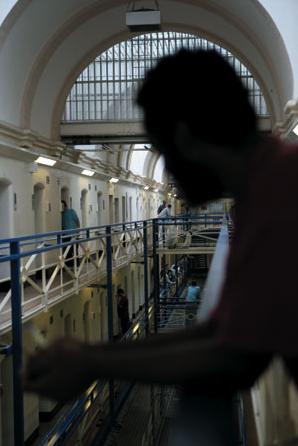
A recent report from the Federal Prison Rape Elimination Commission says government must do more to stop prison rape. In a piece for the corner, a National Review Online blog, Eli Lehrer writes that the commission's recommendations should be embraced by state, local, and federal governments.
He further notes that, "Congress may also want to reconsider laws that make it very difficult for prisoners to sue prison authorities absent concrete evidence of physical harm. It's quite possible that many legitimate prison-rape claims get thrown out of court under current laws. And prison rape needs to stop."
Deborah M. Golden, an attorney with the D.C. Prisons' Project of the Washington Lawyers' Committee for Civil Rights and Urban Affairs, reported in an ACS Issue Brief, that the Prison Litigation Reform Act (PLRA) "may prevent rape victims from bringing lawsuits against their attackers." In her 2006 Issue Brief, The Prison Litigation Reform Act - A Proposal For Closing the Loophole for Rapists, Golden wrote that, "In order to receive monetary compensation, the PLRA requires that any plaintiff demonstrate that she or he has a physical injury. In the current legal system, this torture must be analyzed within the framework created by the PLRA that ‘no federal civil action may be brought by a prisoner confined in a jail, prison, or other correctional facility, for mental or emotional injury suffered while in custody without a prior showing of physical injury.'"
Golden continues, "The PLRA leaves one with a simple choice in a complex area. Is rape an emotional injury or a physical one? Rape must leave a physical injury within the meaning the 42 U.S.C. § 1997 e(e) to be actionable. However, to avoid judicial confusion and wasted judicial resources, Congress should amend the PLRA to make it clear that rape and all forms of sexual assault are compensable injuries, whether there is discernable physical injury or not."
Beyond government action, Lehrer says that society must change:
Government runs the prisons and, in the end, government policy will have to play the dominant role in eliminating prison rape. But, to facilitate that, society also has to change and acknowledge that, even though most people in prison have done awful things, they're still human beings and still have rights.