



July 28, 2026
Why DOJ's Reported Return to Prosecutorial Quotas Will Fail
Former Assistant United States Attorney for the Southern District of West Virginia
The views expressed on the Expert Forum are those of the authors writing in their personal capacity. The views presented do not represent the American Constitution Society or its chapters.
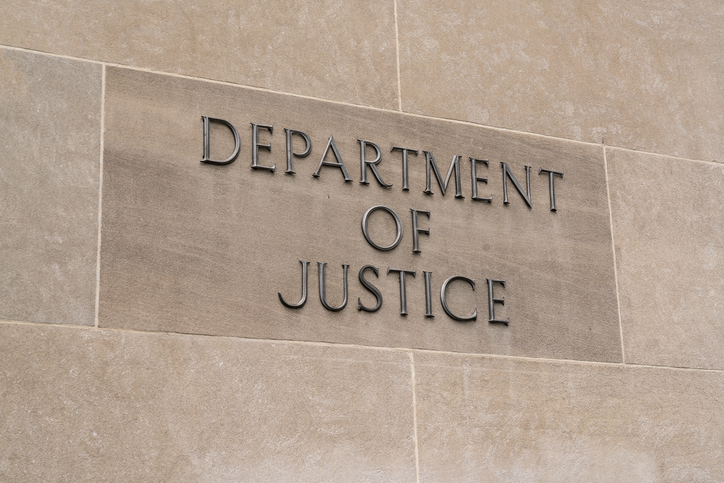
Recent reporting by Bloomberg Law indicates that Department of Justice leadership has directed all 93 United States Attorneys’ Offices to require every Assistant United States Attorney to maintain at least 25 open matters as part of an effort to increase productivity statistics. According to the report, Main Justice, the Justice Department's headquarters in Washington, D.C. overseeing the nation's U.S. Attorneys' Offices, is monitoring case management data across the country, and the policy reflects a broader effort to demonstrate that the Department is accomplishing more despite significant personnel departures. While the precise contours of the policy are still being developed, the report raises a significant concern: that numerical metrics may increasingly become a proxy for prosecutorial performance.
I have worked under a quota system before. This is the first time I have written publicly about that experience. When I joined the United States Attorney’s Office for the Southern District of West Virginia in 2019, I was told by the criminal chief on my first day that prosecutors in that office were expected to charge 30 cases each year.
For many younger prosecutors, that number became a constant source of anxiety. Whether leadership intended it or not, people believed their careers depended on reaching the quota. Conversations in the office increasingly turned toward numbers—how many cases someone had charged, whether they were on pace to hit 30, and whether they would be criticized if they fell short.
Having spent years studying the role of prosecutors in our criminal justice system, I understood that the decision to charge someone with a crime carries profound consequences. I therefore decided very early that I would not let a quota dictate my judgment. I remember thinking to myself, “If I have 30 cases that deserve to be charged, I’ll charge 30 cases. If I don’t, I won’t.” That philosophy shaped every charging decision I made during my time at DOJ. Looking back, I realize that decision insulated me from a pressure that many younger prosecutors understandably felt.
The reason is simple. Federal cases are not interchangeable. Some prosecutors spend much of their time handling high-volume matters that can be investigated and charged relatively quickly. Others spend months—or years—building a single healthcare fraud, public corruption, securities fraud, or national security investigation. Those cases often involve millions of documents, countless witness interviews, forensic accounting, electronic evidence, grand jury practice, and coordination among multiple agencies.
One complex white-collar investigation can consume the same prosecutorial bandwidth as dozens of routine criminal cases. A prosecutor handling a high-volume docket may be extraordinarily productive. So may the prosecutor who spends 18 months building a single public corruption, healthcare fraud, or national security case. Those prosecutors should not be measured by the same metric because they are performing fundamentally different work. Any system that treats those matters as equivalent simply because each counts as “one case” misunderstands the nature of federal prosecution.
That is why the recent Bloomberg Law report caught my attention. According to the report, Department leadership has directed Assistant United States Attorneys to maintain at least 25 open matters as a way of measuring productivity.
If the reporting is accurate, I believe the Department is repeating a mistake that many prosecutors have already experienced firsthand. This is hardly a new debate. In 2008, the Los Angeles Times reported on criticism of numerical performance expectations inside one of the country’s largest U.S. Attorney’s Offices. Prosecutors warned that quotas encouraged attention to statistics rather than professional judgment and created incentives that undervalued the complex investigations only federal prosecutors are positioned to pursue.
Those concerns have not changed. The Department of Justice has always depended on judgment more than production. A prosecutor’s responsibility is not simply to file charges. It is to decide whether charges should be filed at all. Some of the best work a federal prosecutor ever does never results in an indictment. It may consist of concluding that the evidence is insufficient, asking investigators to do more work, or deciding that a case belongs in state court rather than federal court. None of those decisions increase a prosecutor’s numbers. But all of them may serve justice.
Quotas create pressure in subtle ways. Prosecutors are human—when they know they are being measured by numbers, numbers inevitably begin to influence their behavior. Weak or marginal cases become more likely to be charged. Declinations become more difficult. When that happens, suppression rulings, dismissals, and acquittals become more likely, damaging the credibility of the office and making other cases harder to resolve. Time spent developing a complex investigation becomes harder to defend because it produces fewer immediate results. The environment creates poor office morale, which results in higher turnover and loss of intellectual capital.
Leadership should be designed with that reality in mind. The best leaders I worked for never managed prosecutors through spreadsheets. They understood instead that every prosecutor was different. Some were gifted trial lawyers. Others excelled at appellate work, white-collar investigations, healthcare fraud, or public corruption. Good leadership develops those strengths rather than forcing every prosecutor into the same numerical mold. Good leaders understood that every attorney carried a different docket, different investigative responsibilities, and different challenges. They asked thoughtful questions about cases, strategy, victims, resources, and legal issues. They expected excellence, but they trusted prosecutors to exercise professional judgment.
That trust produced accountability without sacrificing independence. Ironically, my own office demonstrated the point. After the charging quota disappeared, morale improved significantly. Prosecutors stopped worrying about arbitrary benchmarks and focused instead on making sound charging decisions. In my observation, the office became more productive—not less—because people felt trusted to exercise judgment rather than satisfy a metric.
There is an important distinction between accountability and quotas. Every prosecutor should be held accountable for diligence, preparation, ethics, professionalism, and sound judgment. Supervisors should expect attorneys to move investigations forward, communicate effectively with victims and law enforcement, and handle their responsibilities efficiently. But none of those qualities can be measured by a minimum case count.
Good U.S. Attorneys understand that leadership is not about producing better statistics. It is about building a culture where prosecutors have the confidence to make difficult decisions, including the decision not to prosecute when the facts or the law do not justify it.
The Department of Justice earned public trust in prior administrations because generations of prosecutors understood that their responsibility was to exercise independent judgment, not to maximize production. DOJ has never been defined by the number of cases it files. It has been defined by the quality of its judgment. That is the standard by which prosecutors should be evaluated—and the standard by which DOJ leaders should lead.
Andrew J. Tessman is a former Assistant United States Attorney for the Southern District of West Virginia. In 2022, he was selected to serve on detail to the U.S. Attorney’s Office for the District of Columbia, where he prosecuted cases arising from the January 6 attack on the U.S. Capitol. He is the Founding President of the ACS Mountaineer Lawyer Chapter. The views expressed are his own.