



January 5, 2026
Strengthening ACS and Our Democracy
ACS President
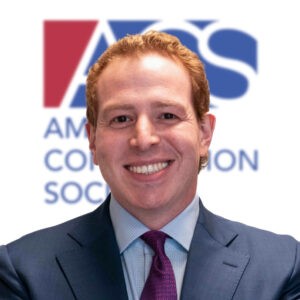
Today, I begin my tenure as president of the American Constitution Society.
I want to take a moment to introduce myself to all of you, the network that forms the backbone of ACS, and to lay out what I hope to accomplish this year as ACS celebrates its 25th anniversary and the nation celebrates its 250th.
First, I want to express my gratitude to the ACS staff and Board of Directors for their dedication to the organization and its success. I’m particularly thankful to Zinelle October for her leadership of ACS during a profoundly challenging time for our country.
We are at a critical inflection point in our nation’s history. The rule of law is under assault. Democratic principles and democracy itself are attacked daily. Institutions are under immense pressure. Civil society faces new threats.
Now, more than ever, we need organizations like ACS, and we need dedicated, principled people like you. After all, the protections of the Constitution mean little without a collective will to act. And so, it will be my mission to make ACS the forum for the students, lawyers, academics, policymakers, and judges who are ready to accept both the opportunities and the responsibilities of this moment.
I’m no stranger to the mission and impact of the American Constitution Society. After clerking on the California Supreme Court and working at two large law firms, I spent six years working on the Senate Judiciary Committee and two in the White House Counsel’s Office. Much of that time was spent working on judicial nominations, helping to build a modern, diverse Judiciary that rejects both the narrowmindedness and politicization of the courts wrought by originalism.
In these roles, I frequently looked to ACS, from the organization’s Path to the Bench project to its annual Supreme Court review. ACS was instrumental in expanding the pool of potential nominees, drawing attention to conservative efforts to subvert free and fair elections, and pushing back on the outcome-driven rulings of the runaway Supreme Court.
ACS’s value wasn’t abstract; I saw it, I understood it, I benefited from it.
I recognize, though, that ACS has much room for growth. We must expand our network, deliver more targeted and relevant programming, and continue to build on our successful pipeline programs.
As I step into this new role, I am guided by these five questions:
- How can ACS both meet the moment and prepare for the future?
- How can we make constitutional theory and legal principles more concrete and meaningful—not just for lawyers in their work, but for people in their everyday lives?
- How can we rebuild institutions, while recognizing the need to move beyond the status quo?
- How can ACS empower our network, build community, and push people towards action?
- Above all, how can ACS help ensure that the law is a force for good?
I don’t have all the answers. I do, however, have a plan that I want to share with you. I believe this plan will help us collectively reach answers to the questions above:
- We will return to an in-person National Convention, to be held in Washington, D.C. from June 18th to 20th. This 25th anniversary celebration will feature influential speakers who will address the most pressing questions in law and policy. I invite you to join us as we gather to hear from the nation’s most distinguished jurists, policymakers, academics, and practitioners.
- I will visit 100 student and lawyer chapters in my first year on the job. These chapters are not only the lifeblood of ACS, but a tailor-made infrastructure for sharing ideas, testing theories, and gathering diverse inputs. My intent is to learn from our network and shape an ACS that works best for you.
- We will continue to build on some of our most successful efforts—from our State Attorneys General Project to our Path to the Bench initiative—while ensuring that these efforts address today’s realities, including the growing importance of state courts as a bulwark against overreach by the Trump Administration and the Roberts Court.
- We will explore creating new chapters and working groups and new ways of building community. We are already moving quickly to design working groups focused on lawyers serving rural communities and another for servicemembers and military veterans.
- And we will continue to generate and deliver the highest quality programming and content, with an emphasis on addressing nationwide challenges—around democracy, the rule of law, courts, and constitutional interpretation.
I can’t do this alone. I’ll need you, the ACS network, to be my partner in this task. I want to hear from you. Whether it’s to build a new chapter or to suggest a topic for our Broken Law podcast, I invite you to share your ideas here. And if you’re not yet a member of ACS, I encourage you to join. It will take you just a few minutes and you can do it here.
Together, and with your support, we will move ACS forward. We will continue to build a community around a shared identity and values. We will defend democracy and support those who champion the rule of law. And we will transform our system of law and government into a force for good in all our lives.
It is my honor to lead the American Constitution Society.
I look forward to meeting you and working alongside you in these vital endeavors.