


November 2, 2026
When Election Disinformation Threatens the Right to Vote, the Law Must Respond
Faculty, Harvard Law School; Instructor, Harvard Election Law Clinic
Instructor, Yale Law School Media Freedom Clinic
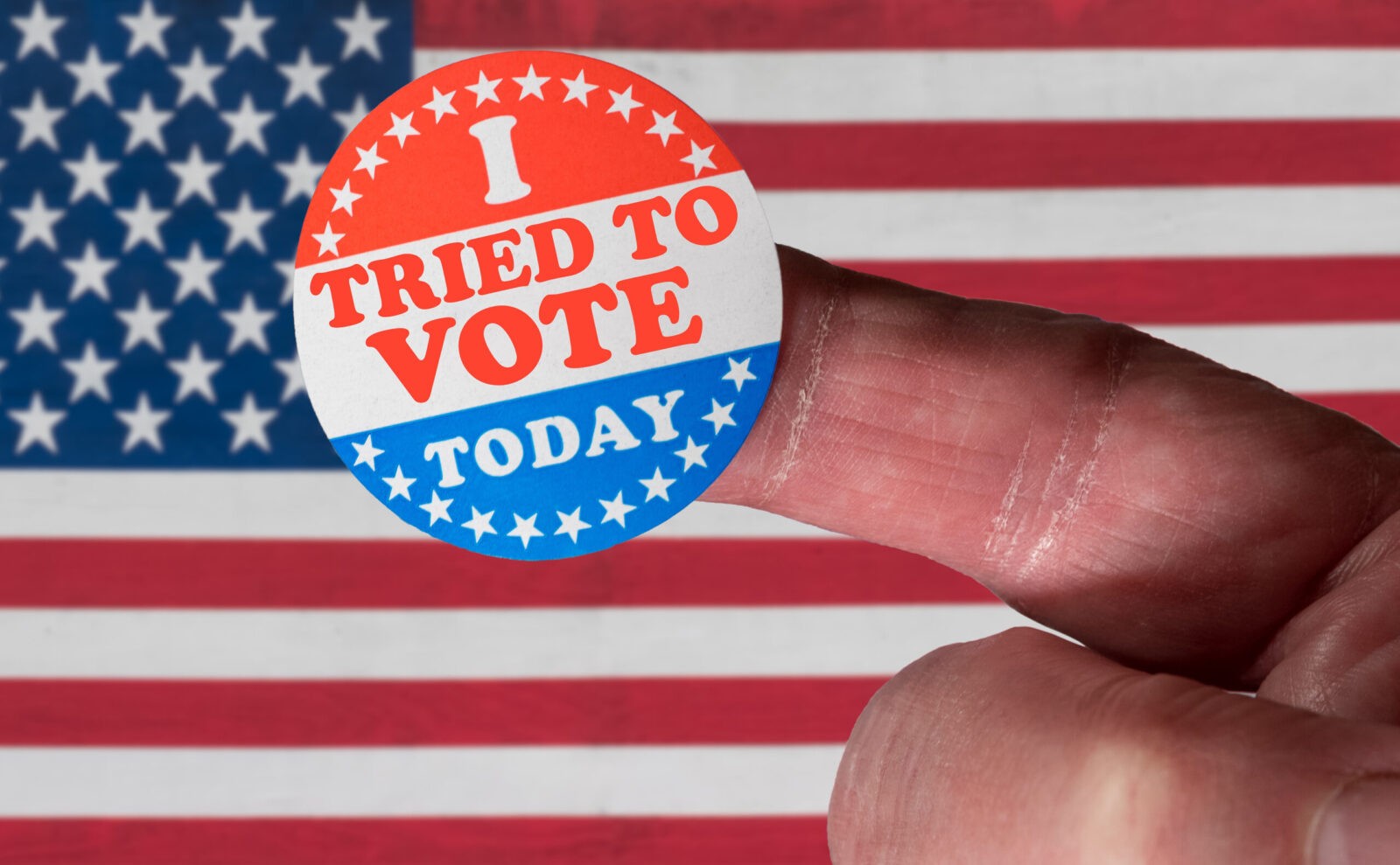
ICE at the polls. Last minute voter roll purges. As the midterms loom, no shortage of election threats have catalyzed public discourse and preparedness efforts. But less time has been spent coordinating against what is arguably one of the biggest threats: election disinformation. The reason? Often compared to other categories, it feels unaddressable, foreclosed by our First Amendment jurisprudence. But it is not so black and white.
It’s worth aligning on definitions first. Election disinformation is the spread of false information disseminated to mislead the electorate. As the NAACP describes, falsehoods (often spread online) about where to vote or how to vote risk disenfranchising large swaths of vulnerable populations. One tracker shows that in this cycle alone, over 220 online accounts have spread dozens of falsehoods. In several voter registration scams, for instance, individuals pose as election officials and incorrectly tell voters they are improperly registered or ask them to register to vote over the phone in states where it's not permissible.
One reason there may be less coordinated defense efforts on disinformation is because lawmakers and local government leaders feel powerless to make a change. In August, one of the only states that has tried to tackle election disinformation was unsuccessful in the courts. With some exceptions (such as committing fraud, or perjury under oath) the Constitution generally protects our ability to say and spread lies. This makes our country unique in its speech protections, which are aimed at preventing chilling and self-censorship.
The theory goes that we need this breathing room to freely engage in the discourse and debate required for self-governing. The Supreme Court explained this rationale most clearly in a decade-old case involving someone who lied about having served in the military, explaining that “some false statements are inevitable if there is to be an open and vigorous expression of views in public and private conversation, expression the First Amendment seeks to guarantee.” What’s more, sometimes information is genuinely evolving in real-time. So our jurisprudence also leaves breathing room for situations where truth vs falsity is a moving target–as was the case with discovering COVID-19’s transmission, leading public health officials to change recommendations around washing groceries and masking.
But this speech-protective approach is not absolute, and, in the context of the franchise—one of our most fundamental rights—line drawing is necessary and possible. As scholars like Richard Hasen have explained, the low cost and enormous reach of online communications create conditions where a false claim about a voting procedure can reach thousands in seconds, while a correction may arrive too late. Indeed, research on digital misinformation suggests that false or low-credibility content spreads more rapidly through online networks.
Lawmakers and local leaders often overstate the constitutional barriers to regulating election disinformation. But in reality, the law is not categorically averse to regulating falsehoods. The Supreme Court itself acknowledged this distinction in the same stolen valor case involving the fake-veteran, explaining that “there are instances in which the falsity of speech bears upon whether it is protected” and that “[s]ome false speech may be prohibited even if analogous true speech could not be.”
We already prohibit certain lies when they threaten sufficiently concrete interests, including fraud, perjury, and falsely impersonating a federal officer. The Court has also explained in commercial contexts that the First Amendment does not protect “intentionally misleading statements designed to deceive the listener.” And in fact, when it comes to making sure people have the right information to cast their vote, the Court has gone even further, recognizing that states have an interest in protecting voters from confusion and undue influence at the polls.
Of course, some daylight in the form of a few indications from SCOTUS do not give lawmakers a completely blank check to police disinformation-y speech. But these signs from the Court do undermine the notion that local leaders are somehow powerless whenever a harmful falsehood threatens disenfranchising people.
We should use this daylight and stop treating election disinformation as untouchable. Too often, leaders get in their own way, treating constitutional uncertainty as a reason for inaction rather than a boundary to test. We will not know the contours of permissible regulation until lawmakers are willing to act and courts are asked to draw the lines. The ability to cast informed votes in the bedrock of our democracy, and the risk of disenfranchisement from false election information is too great to justify standing by. The Court has left us some space, and if protecting the exercise of the franchise is not what that space is for, what is?