



April 6, 2026
The Court’s Conversion Therapy Decision Endangers LGBTQ+ Youth
Professor and Dean's Scholar, University of Colorado Law School
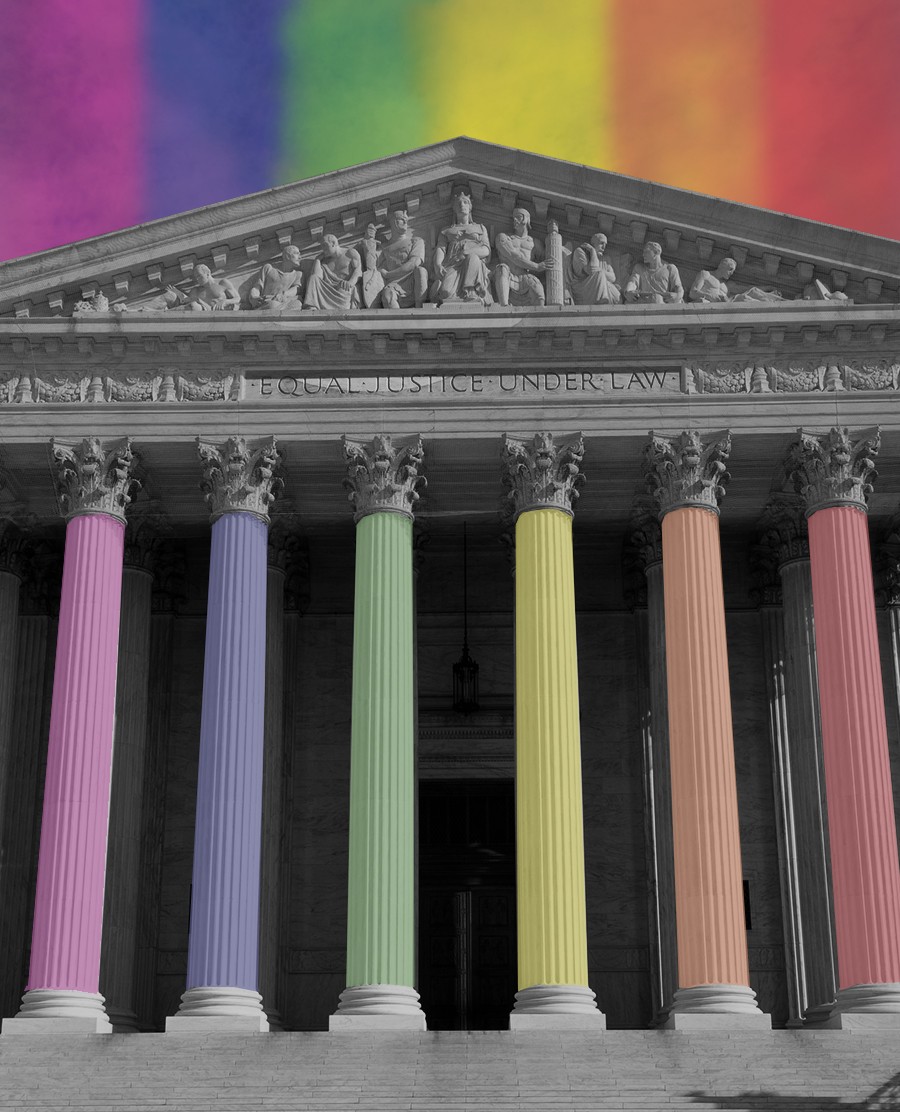
Enforcing bans on LGBTQ+ “conversion” practices against talk therapy may be unconstitutional after the Supreme Court ruled that such therapy is robustly protected under the First Amendment.
The Supreme Court held on March 31, 2026 in Chiles v. Salazar that, as applied to licensed therapists engaged solely in talk therapy, Colorado’s ban on the practice of so-called LGBTQ+ “conversion therapy” for minors was subject to strict constitutional scrutiny under the First Amendment. This difficult standard generally requires the burden on speech to be justified by a compelling government interest and burden as little speech as possible to achieve that interest.
Colorado first banned the practice of attempting to forcibly change someone's sexual orientation or gender identity, known as “conversion therapy,” in 2019. The ban includes prohibitions on physical aversion techniques, including, for instance, electroshock therapy or application of other physical stimuli designed to punish or deter same-sex attractions. But it also includes the more common practice of attempting to forcibly change someone's identity via words — words that can inflict intense and long-lasting psychological damage.
Importantly, the Supreme Court emphasized that as applied to many forms of “conversion” practices, including those that involve physical aversion, Colorado’s ban was perfectly constitutional, raising no First Amendment speech concerns.
That is, the Court did not strike down the Colorado statute in its entirety. Not at all.
Lower courts to decide
Even as to the talk therapy at issue in Chiles, the Court did not rule that the statute was unconstitutional. Rather, the Court only concluded that the statute was subject to strict constitutional review because, in the Court’s view, the statute was not targeted at professional conduct. Instead, according to the Court's interpretation, the statute could be applied to punish the content and viewpoint of a therapist’s pure speech — their spoken words — regarding sexual orientation and gender identity.
Consequently, the state of Colorado will now be required to demonstrate that the burden on speech was justified by a compelling government interest and narrowly tailored to that interest. The Court remanded to the lower courts for consideration of whether Colorado can satisfy that standard. Though, historically, the Court has recognized that laws protecting people's health and safety are quintessential compelling government interest.
So-Called “Conversion therapy” causes harm
As my research has explained, because robust medical evidence exists demonstrating that conversion practices are not effective — that is, people’s sexual orientation and gender identity are not susceptible to forced change — and cause psychological harm because they denigrate people’s identities, Colorado will be well positioned on remand to demonstrate that the statute can withstand strict scrutiny.
First Amendment as foe of LGBTQ+ rights
But make no mistake, the decision is yet another setback for LGBTQ+ rights under the Roberts Court. It represents another example of the Court wielding an expansive conception of First Amendment doctrine to limit laws seeking to protect LGBTQ+ individuals. Whether it be cake bakers, wedding website designers, or now even health care providers carrying the imprimatur of the state in the form of a government-issued license, the Court is erecting significant barriers to protecting LGBTQ+ individuals using the First Amendment. And there are more First Amendment disputes on the Court's horizon, including whether religious schools that accept state funds can discriminate against LGBTQ+ pupils.
The Court’s trend of finding First Amendment exceptions when anti-discrimination protections are applied to LGBTQ+ individuals goes against decades old precedent suggesting that sex and race based anti-discrimination laws do not infringe on business operators First Amendment rights and sends a message that LGBTQ+ individuals are less deserving of societal protection.
This message from the high court is particularly problematic at a time when many states are targeting LGBTQ+ people generally and transgender people specifically for regulatory oppression.
Indeed, in the year prior to the Chiles decision, the Supreme Court concluded in United States v. Skrmetti that state bans on gender-affirming care for minors were not subject to heightened scrutiny and survived rational basis review. Under such review, a law will be upheld if it is justified by any conceivably legitimate government interest. And yet, pursuant to the Court’s decision in Chiles, laws seeking to protect queer youth will now be subject to strict scrutiny if they burden a therapist’s speech.
Implications for professional regulation
The implications of the Chiles decision will reverberate beyond LGBTQ+ rights.
Many professionals, including health care providers and lawyers, are regulated via their speech. For example, lawyers can violate malpractice protections and potentially be disbarred if their legal advice – that is, their words or pure speech – is wrong and violates governing standards. Medical providers can be held liable for their words if they communicate medical advice that goes against the standard of care.
Pursuant to the reasoning of Chiles, these kinds of professional regulations could be subject to robust First Amendment scrutiny, potentially imperiling professional regulation in a variety of contexts, including the law and medicine.
Unclear future
In short, the Court’s decision makes plain that bans on “conversion therapy” that involve physical practices — conduct — are uncontroversial and fairly subject to state regulation. But to the extent they are applied to particular viewpoints expressed through pure speech, they are subject to strict scrutiny, and could potentially be ruled unconstitutional. On remand, it may be that lower courts conclude that the weight of medical evidence and survivor testimony indicate strict scrutiny is met. But in the interim, the Supreme Court has once against indicated that LGBTQ+ anti-discrimination laws take a back seat to the expressive concerns of those opposing such rights.
Scott Skinner-Thompson is a scholar of Constitutional Law at Colorado Law School who submitted amicus briefs in support of the State of Colorado before the Supreme Court and the Tenth Circuit.