



January 21, 2011
Private: Tea Party Advancing Harmful Rhetoric on Constitution; Time to Push Back, Prof. Epps Writes
constitutionalists, Garrett Epps, Justice Antonin Scalia, Keeping Faith with the Constitution, Pamela S. Karlan, Tea Party
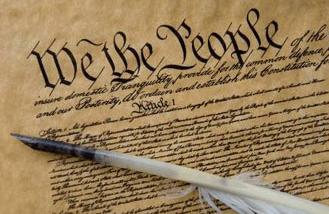
Tea Partiers and so-called "constitutionalists" have, to a large extent, successfully convinced swaths of the nation that they are the great defenders of the Constitution, and that all who disagree are crazed, unpatriotic or traitors, likely all three, writes Garrett Epps for The Nation.
In "Stealing the Constitution," Epps, a correspondent for the Atlantic and a law professor at the University of Baltimore School of Law, notes the "toxic coalition of Fox News talking heads, radio hosts, angry ‘patriot' groups and power-hungry right-wing politicians" helping to fuel "poisonous rubbish" about the Constitution.
The Tea Party and other fringe rightists are promoting a seriously cramped Constitution, one frozen in time and limiting of government. "It's easy to understand why conservative politicians and judges are trying to align their political program with a strained reading of the Constitution: Social Security, Medicare, environmental protection and aid to education have broad popular support. Even the healthcare program, so reviled by the Republican Party, will be almost impossible to repeal using the legislative process," Epps writes. (Indeed, the rightist majority of the House did pass a measure repealing the landmark health care reform law this week, but was quickly called on its blatant political posturing.)
Epps urges progressives to start countering the myth pushed by the Right that "anyone" who doesn't fall in line with its claims about the Constitution is "at best unpatriotic, at worst a traitor."
Epps continues:
Enough of that. The Constitution belongs to all of us. It's time to take it back from those who are trying to steal it in plain sight. Our Constitution wasn't written to rig the political game but to allow us to play it without killing one another. It created a government and gave that government the power it needed to function.
Far right conservative constitutional academics and jurists have spent years pushing the notion that the Constitution greatly limits the power of government.
"But the document," Epps writes, "as a whole is much more concerned with what the government can do - not with what it can't. From the beginning it was empowered to levy taxes, to raise armies, to make war, to set the rules of commerce and to bind the nation through treaties and international agreements. There's no sign of the libertarian fairyland many on the far right have invented. Rather, the Constitution allowed for a government adequate to the challenges facing a modern nation."
Epps adds:
The most important truth about the Constitution is this: it was written as a set of rules by which living people could solve their own problems, not as a ‘dead hand' restricting their options. Strikingly many important questions, from the nature of the Supreme Court to the composition of the cabinet, are left to Congress. There's ample evidence in the text that the framers didn't think of themselves as peering into the future and settling all questions; instead, they wrote a document that in essence says, ‘Work it out.'
Epps also takes on "originalism" as the only way to interpret the Constitution. Supreme Court Justices Antonin Scalia and Clarence Thomas are among the leading proponents of originalism.
He writes:
This notion - that there is somehow a fixed, binding, single intent hidden in each phrase of the Constitution - confuses the Constitution with the Bible. The idea of a single, literal, intended meaning of a biblical text gained primacy during the Reformation. The religious historian Jaroslav Pelikan sees in early Protestant theology the origins of American constitutional discourse. Luther and the other Reformers believed that ‘Scripture had to be not interpreted but delivered from interpretations to speak for itself.'
For more accessible examination of the Constitution and constitutional interpretation of, see Keeping Faith with the Constitution, a book that explains the troubling shortcomings of originalism, and advances the principles and values of the Constitution and more thoughtful ways of applying it in today's society. Also watch this ACSblog interview with Stanford law school professor Pamela S. Karlan, co-author of Keeping Faith, on constitutional interpretation.