



September 12, 2011
Private: Passage of Patent Reform Shows Congress and President Can Come Together on Behalf of Economy
Congress, Leahy-Smith America Invents Act, Marla Grossman, Patent and Trademark Office, patent reform, President Obama, PTO
By Marla Grossman, Partner, American Continental Group
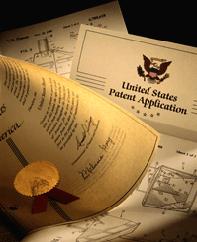
Last week, the Congress passed the most comprehensive patent reform in the U.S. in over 50 years. Just hours before President Obama gave his jobs speech, the U.S. Senate passed H.R. 1249 by a vote of 89 to 9, clearing the bill for the president’s signature. The bill’s title is the Leahy-Smith America Invents Act, and it will help promote American innovation, thereby creating additional jobs in this country and, hopefully, enhance the economy.
Passage of the America Invents Act is the culmination of more than a decade of efforts of innovators and public policy makers. Several of the provisions implement recommendations made by the Federal Trade Commission in 2003 and the National Academy of Sciences in 2004. Congress worked on this bill from the 108th – 112th congressional sessions, holding dozens of hearings and engaging in extensive debate.
Some of the key features of the final legislation include:
- Transitioning to a first-inventor-to-file system, harmonizing the U.S. patent system with the rest of the world;
- Replacing the costly interference proceedings with derivation proceedings to determine the right to a patent;
- Updating and improving the inventor’s oath/declaration;
- Authorizing pre-issuance submissions by third parties prior to the grant of a patent to aid patent examiners and improve patent quality;
- Creation of a new, first-window post-grant review process to improve patent quality;
- Improving the current inter partes system by heightening the threshold for instituting a review, making it more difficult to use the process to harass a patent owner;
- Creation of a new supplemental examination proceeding to incentivize patent owners to commercialize their inventions despite potential flaws in the application process;
- Making failure to disclose the best mode no longer a basis for invalidity;
- Eliminating harassing false marking lawsuits, and addressing recent holdings that the current statute is unconstitutional; and
- Providing for a 15 percent increase in Patent and Trademark Office (PTO) fees that will take effect 10 days after enactment of the bill so the agency can have a quick infusion of desperately needed resources.
It is not a perfect bill. Most notably, it does not guarantee the PTO stable, future funding and does not require that the agency be able to utilize all of its user fee collections. By definition, however, a “perfect” bill is one that has no chance of ever becoming law in this country of diverse opinion and representational government.
Most innovators with whom I’ve consulted regard this legislation as a significant step forward in improving the patent system.
Passage of this bill also demonstrates to the American people that Democrats and Republicans can come together to enact meaningful legislation for the American people. The bill was sponsored by the leading Democrats and Republicans on the House and Senate Judiciary Committee. It was supported by the administration. The overwhelming vote was bipartisan.
In the days ahead, the president and Congress will continue to focus on job creation. Support of the patent system is crucial to this effort – a concept recognized by our Founding Fathers, who understood the significance of innovation to America’s economic growth and prosperity and therefore lay the foundation for the U.S. patent system in the Constitution, - Article 1, Section 8, which gives Congress the power “[t]o promote the progress of science and useful arts, by securing for limited times to authors and inventors the exclusive right to their respective writings and discoveries.”
The America Invents Act helps update this foundation in the manner enumerated above so that patents in this country can continue to foster innovation, which is essential to the core strength of our nation’s competitiveness in the global economy.
Patents are also crucial to the improvement of the quality of life for so many people in this country. Last week I had the honor of attending the PTO’s celebration of the grant of its eight millionth patent. The assignee of this patent was a company called Second Sight. It developed, manufactured and marketed a visual prosthetic that actually gave sight to the blind. As I sat in the audience watching a woman who was once totally blind able to make her way up to the podium and tell the audience that she can now commute to work on her own in New York City because she can see the crosswalks and street signs, it became crystal clear why so many innovators have been pushing for passage of patent reform for so long.
As PTO Director Dave Kappos said at the ceremony:
Patent No. 8 Million also serves as a critical reminder of how patents, the backbone of innovation, underwrite the next great chapters of advancement for our economy and our planet.
They allow everyone—no matter their age—and every business—no matter their size—to raise the capital and hire the employees it takes to make sure society can benefit from groundbreaking products, tools and services.
Patents also allow us to continuously reshape, retool and reevaluate the world around us—building upon previous platforms of invention to raise the collective prospects for all corners of the world.
And the beauty of that innovative pursuit is that there really is no end in sight.
With the passage of the America Invents Act – no end in sight, indeed.