



February 11, 2026
Observing ICE Is Legal. Killing Observers is Not.
Professor and Dean's Scholar, University of Colorado Law School
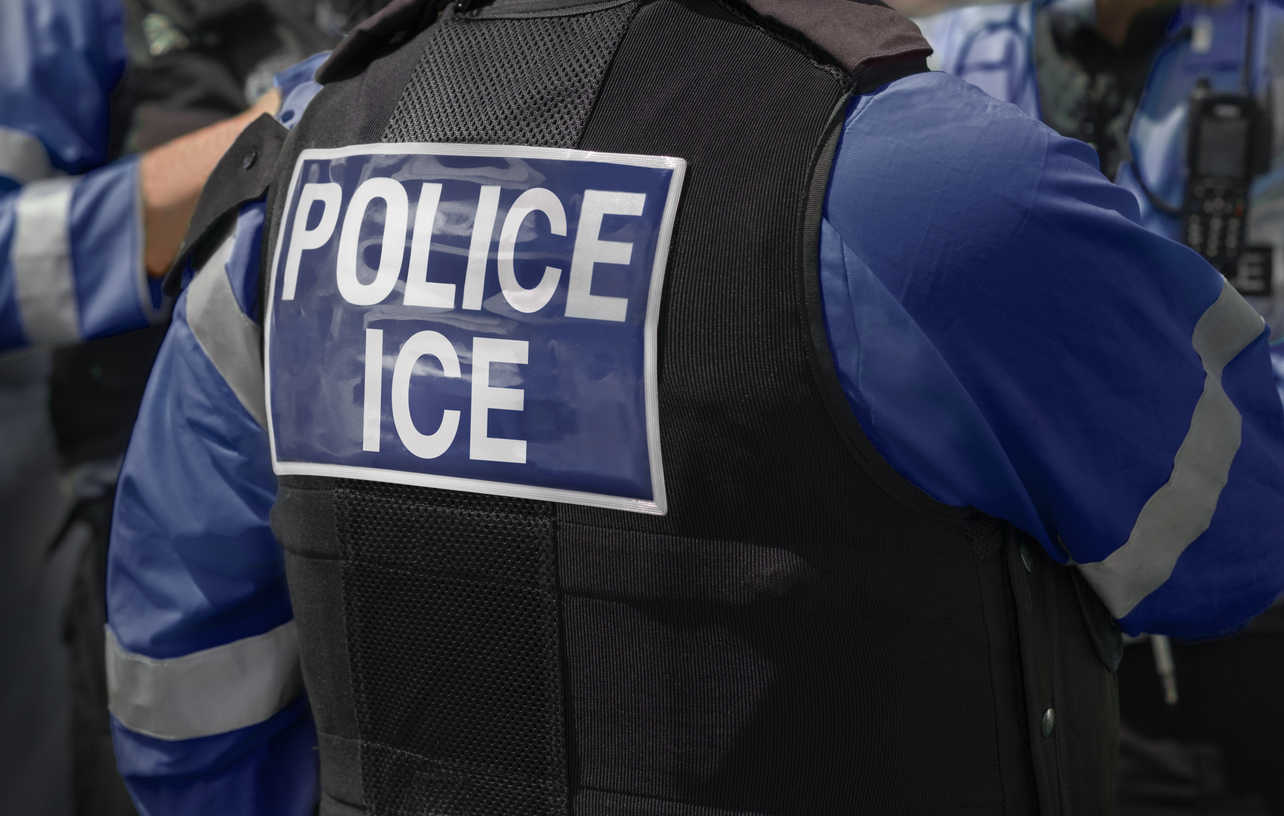
The violence of the Trump Administration’s extreme immigration enforcement tactics is costing precious lives and corroding core constitutional rights. These rights have long existed only in theory for communities of color. As but one example, in 2010, a Customs and Border Protection (CBP) agent shot and killed a 15-year-old Mexican child, Sergio Adrián Hernández Güereca, while the boy was in Mexico. The Supreme Court refused to provide Hernández’s parents with the barest of legal remedies.
The Trump Administration’s killings in Minnesota underscore what minoritized communities have long experienced—that without widespread societal vigilance rights can become ephemeral overnight. The brutal practices employed by Immigration and Customs Enforcement (ICE) and CBP have trampled fundamental freedoms that are the backbone of our fragile democracy and threaten its future. The number of people killed, families terrorized, and rights broken is heartbreaking. The constitutional violations include our First Amendment rights to free expression, our Fourth Amendment rights to be free from unreasonable use of force, our rights to be free from discrimination under the Equal Protection Clause, and our Second Amendment right to possess arms. In isolation, each violation is troubling enough. Together, they speak to a complete disregard of individual liberties and constitutional norms.
As federal courts have routinely recognized, individuals possess a First Amendment right to observe and record law enforcement officers in public space performing their public functions. Such recording serves multiple First Amendment interests. First, recording is protected information gathering on government operations, enabling viewers to make more informed decisions about policies under our democratic system. Second, it can facilitate future speech by the recorder including subsequent dissemination and broadcast of the recording to others. Third, it enriches the marketplace of ideas, providing diverse perspectives (often in contrast to the distinct physical perspectives provided by law enforcement surveillance recordings and misleading public statements made by government agencies about their actions). Fourth, it acts as a direct, in the moment statement of resistance against the recorded activity, helping to ensure government accountability. Fifth, recording can help reclaim the public square for the people—public space that has historically been the cornerstone of First Amendment dialogue and that has been made perilous by law enforcement actions, particularly for marginalized communities.
In response to the First Amendment right to record, law enforcement agencies, including ICE, sometimes contend that they can stop the person recording if they are interfering with law enforcement activity. While it is true that if the person recording begins to physically interfere with an arrest, then arguably law enforcement could stop the recording and briefly detain the individual, it would be a very rare situation where the act of recording itself would sufficiently interfere to justify stopping the recording or arresting the person for interference or purported “obstruction.” Put differently, accountability alone is not interference or obstruction.
And even if the recording does begin to impede law enforcement operations, under no circumstances would such interference justify the degree of force being brutally imposed by federal agencies like ICE and CBP. Consistent with the rich tradition of peaceful civil disobedience by minoritized groups, whether they be racial justice advocates, HIV activists, feminist activists, or others, breaking the law in the name of signaling the law’s injustice does not give officers open license for brutality.
The Fourth Amendment prohibits unreasonable use of force by law enforcement agencies. Under well-established Supreme Court precedent, determining whether the use of force is reasonable or not involves balancing the scope of the government intrusion versus the governmental interests alleged to justify the force. That is, the force must be proportional. This is not a mechanical test and facts must, according to the Court, be “slosh[ed]” through. Factors include the extent of law enforcement force, whether the individual posed a threat to the public or officers (both the magnitude and likelihood of that threat), the severity of any underlying crime, whether the individual is actively resisting or fleeing, and whether law enforcement gives a warning first. And the Court has made clear that “notwithstanding probable cause to seize a suspect, an officer may not always do so by killing him. The intrusiveness of a seizure by means of deadly force is unmatched. The suspect's fundamental interest in his own life need not be elaborated upon.” Continuing, the Supreme Court has explained that allowing officers to use deadly force anytime they had reason to arrest a person, would in essence turn an officer into judge, jury, and executioner: “The use of deadly force also frustrates the interest of the individual, and of society, in judicial determination of guilt and punishment. . . . The use of deadly force is a self-defeating way of apprehending a suspect and so setting the criminal justice mechanism in motion.”
As applied in practice, this Fourth Amendment standard (supplemented by qualified immunity doctrine), is a relatively law enforcement-friendly standard. Nonetheless, even under this impoverished Fourth Amendment doctrine, as protected First Amendment recordings of federal immigration enforcement activities have laid bare, ICE and CBP have engaged in unconstitutional use of force, executing protestors Alex Pretti and Renée Good who posed minimal to modest risk to law enforcement. If for some reason these killings were permissible under the Fourth Amendment, that says more about the caliber of the law than it does the humaneness of the actions.
In both cases, the force used by federal agents was the maximum—multiple gunshots that tragically killed each protestor. And the purported government interests justifying the shootings are minimal. Each victim was engaged in activity protected by the First Amendment, neither was a fleeing suspect of a violent crime, and even if their activities interfered with ICE or CBP operations, that interference did not justify deadly force. As to Pretti, some have suggested that his concealed possession of a firearm itself justified the force—but if the Second Amendment and Minnesota law permit the possession of such a weapon, how can its mere presence justify Pretti’s execution? It cannot. And as to Good, to the extent her vehicle posed danger to an officer, the officer’s actions contributing to any danger ought not to be disregarded, and the totality of the circumstances beyond the purported “moment of threat” must be evaluated. If she committed a crime, ICE’s ability to identify and potentially detain Good subsequently also suggests that the force was unreasonable.
Finally, ICE and CBP have surveilled, profiled, and occupied many immigrant communities, using children as pawns. While in practice racial profiling by law enforcement and the imposition of racial guilt is prolific, the Supreme Court held over fifty-years ago that an individual’s apparent race and/or ancestry are alone insufficient bases to doubt someone’s lawful presence in the United States. To conclude otherwise would undermine both the Fourth Amendment’s requirement for individual suspicion and the Equal Protection’s protections against discrimination. Under our constitutional framework, immigrants in this country—including undocumented ones—have constitutional rights to be free from race discrimination and are entitled to due process. All persons ought to be treated as such—their lives cherished, not demonized and destroyed.
ICE’s and CBP’s tactics run afoul of all these protections and basic human dignity. First and foremost, their actions endanger the many immigrants who contribute so much to our country. But they also imperil the constitutional safeguards that are designed to protect American democracy and the lives of everyone.