



May 7, 2014
Private: Making Peace with the Second Amendment
District of Columbia v. Heller, Sanford Levinson, Second Amendment Symposium
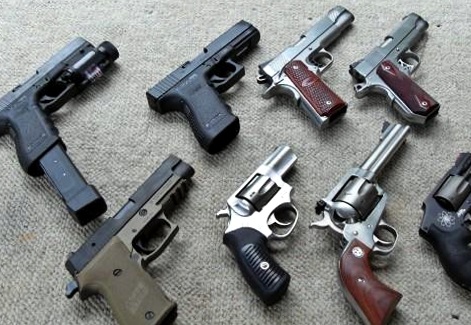 So how should the Second Amendment be interpreted? There are at least two quite different ways of approaching this question. The first involves adopting the position of the detached lawyer, perhaps (one version) of an ideal judge, whose loyalty is only to the “best theory” of the Constitution and, therefore, of the Second Amendment that is part of it. My own inclination is to be skeptical of approaches, whether identified with Ronald Dworkin or Antonin Scalia, that claim to have discerned the “one true meaning” of what I have come to call “the Constitution of Conversation,” i.e., those parts of the Constitution’s text that are sufficiently indeterminate to invite perhaps endless (and often acrimonious) conversation as to how they should be given more specific meaning.
For me, the Second Amendment is easily within the “Constitution of Conversation.” As I wrote in the Yale Law Journal some quarter of a century ago, in “The Embarrassing Second Amendment,” one must decide, at the outset, about the seriousness with which one takes the notion of “civic republicanism” and the possibility of an aroused citizenry, speaking in the name of “We the People,” taking up arms to resist oppressive government. As I wrote in that article, the most interesting bumper sticker is not “when guns are outlawed, only criminals will have guns,” but, instead, “when guns are outlawed, only the government will have guns.”
My own view is that District of Columbia v. Heller was probably (though not certainly) rightly decided, though I despise Justice Scalia’s opinion for the majority, which I regard as a thoroughly meretricious reading of the text and of the relevant historical materials. But, obviously, I think that a far better opinion could have been written, emphasizing both the civil republican strain in American political thought plus the vitality of the Ninth Amendment and the Privileges or Immunities Clause of the Fourteenth Amendment to arrive at the same basic result, i.e., the presence in the Constitution of at least some right, guaranteed against the national government, of law-abiding Americans to possess handguns at least within their own homes. The issue of “incorporation” of this right against the states, which occurred in McDonald v. City of Chicago, is trickier, but, to put it mildly, there is something paradoxical about political liberals suddenly becoming hesitant to incorporate an important provision of the Bill of Rights against regulation-prone states.
As suggested at the outset, though, I think there is a second way to answer the question, which boils down to a combination of what is best for political progressives. Here I have little trouble agreeing with David Cole, among others, that it is time for us to make our peace with Heller and recognize that most Americans believe that there is a protected constitutional right to possess at least some firearms even as most Americans also support sensible regulation. Too many “Reagan Democrats” emigrated to the Republican Party because of an accurate perception that political progressives disdained their desire to own handguns and other weapons for perfectly peaceful purposes (or for legitimate self-defense within the home). Acceptance of Heller and McDonald does not require joining the N.R.A. and does allow support, say, of enhanced background checks of those who would purchase guns.
But political progressives especially might ask why all former felons—think of Martha Stewart—should be deprived of the right to own a handgun in their own homes or why illegal aliens can be required to forfeit what the Supreme Court has declared the “fundamental right” of self-defense with a firearm within the home?