



August 14, 2009
Private: Limits On Death Penalty Review Sparking Judges’ Dissents
death penatly, habeas corpus, Judge William A. Fletcher
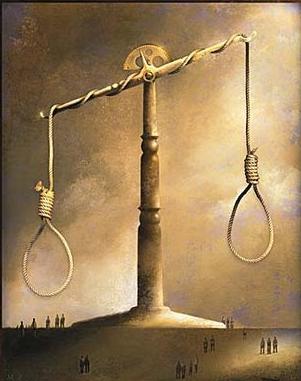
A study by The New York Times reveals an uptick in the number of dissents in death penalty cases. The Times reports that, "In dozens of capital cases in recent years, appeals court judges, some of whom have ruled in favor of the death penalty many times, have complained that Congress and the Supreme Court have raised daunting barriers for death row prisoners to appeal their convictions, and in many cases the judges have taken on their colleagues."
The newspaper cites several cases, including a recent dissent in a U.S. Court of Appeals for the Ninth Circuit case, Cooper v. Brown. California death row inmate Kevin Cooper had sought a stay of his execution, but the Ninth Circuit panel upheld the district court's ruling in favor of execution.
Judge William A. Fletcher filed a lengthy, blistering dissent.
Fletcher wrote:
The State of California may be about to execute an innocent man.
From the time of his initial arrest until today, Kevin Cooper has consistently maintained his innocence of the murders for which he has been convicted.
As The Times reported, Fletcher's dissent scored the police and prosecutors for withholding and tampering with evidence in the case and "even accused the district court of having sabotaged the case."
Fletcher continued:
There is no way to say this politely. The district court failed to provide Cooper a fair hearing and flouted our direction to perform the two tests.
As will be described in greater detail below, the district court impeded and obstructed Cooper's attorneys at every turn as they sought to develop the record. The court imposed unreasonable conditions on the testing the en banc court directed; refused discovery that should have been available as a matter of course; limited testimony that should not have been limited; and found facts unreasonably, based on a truncated and distorted record.
The newspaper reported that the Antiterrorism and Effective Death Penalty Act of 1996, which limits federal court review of death penalty cases and prisoners' habeas corpus petitions, as sparking "much the judges' ire...."
Access to Justice, Criminal Justice, Death Penalty, Procedural Barriers to Court