



April 15, 2010
Private: The Unsung Precursor to Brown v. Board
Brown v. Board of Education, Mendez v. Westminster, Philippa Strum, Plessy v. Ferguson, Separate but Equal
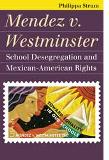
By Philippa Strum, Senior Scholar, Woodrow Wilson Center
In 1943, a decade before Brown v. Board of Education was decided by the Supreme Court, Soledad Vidaurri walked up to a schoolhouse door in Orange County, California. Mrs. Vidaurri had come to the Westminster Main School, in the heart of citrus-growing country, to enroll her two daughters and her niece and two nephews-Sylvia, Gonzalo Jr. and Jerome Méndez -in the neighborhood public school.
The Vidaurri girls were welcomed to the school. They were light-skinned and their part-French father's last name sounded acceptably European. The Méndez children, however, were visibly darker and had a Mexican name. They would have to go to the "Mexican" school a few blocks away.
"No way," an outraged Mrs. Vidaurri exclaimed, and marched all the children home to the farm on which they lived. Her brother and sister-in-law, Gonzalo and Felícitas Méndez, after petitioning school authorities unsuccessfully, brought suit against the school district. Mendez v. Westminster became the first case in which a federal court declared that "separate but equal" was not equal at all.
My book tells the story of the case, and of the social setting in which it occurred. By the 1940s Mexican-Americans were the picking force for California agriculture, which produced a major share of the state's income. Discrimination was endemic. Most of the workers and their families lived in wooden-shacked colonias on the outskirts of towns or farms, with no paved streets, sewers, toilets, or refrigerators. The children of the colonias were consigned to rundown schools that taught the boys gardening and woodworking and the girls sewing and housekeeping. They were routinely permitted to miss school when the harvests were ready to be picked. Most left school when they turned 16, bound for low-wage jobs.
The Méndezes, like other Mexican-American families in southern California, knew that education was the way out - but not the kind of inferior education provided by the "Mexican" schools. They found families in other Orange County school districts who had also tried to put their children into "white" schools, and hired attorney David Marcus to file a class-action suit. Marcus chose not to mention the inferior conditions in the "Mexican" schools. Instead, he argued that the segregation itself, which took place in the absence of language tests and clearly was based on the children's ethnicity, resulted in an inferior education and therefore constituted a violation of equal protection. He had education experts testify that, contrary to the Supreme Court's holding in Plessy v. Ferguson, segregation did carry a stigma, and it affected the ability to learn. The school authorities, describing the Mexican-American children as dirty, claimed they had to be segregated because they spoke no English.
Federal district court judge Paul J. McCormack disagreed. In 1946, in a landmark opinion, he declared that "a paramount requisite in the American system of public education is social equality." What segregation did, McCormack continued, was "foster antagonisms in the children and suggest inferiority among them where none exists," and they were thereby deprived of an equal education.
The NAACP joined Marcus when the school districts appealed to the Ninth Circuit Court of Appeals, and wrote what the lead NAACP lawyer would later describe as the trial brief for Brown v. Board of Education. So did the American Jewish Congress, the ACLU, and the Japanese American Citizens League, along with Governor Earl Warren's attorney general. In 1947, the Ninth Circuit struck down the segregation on the basis of California law, which permitted segregation of Indian and Asian-American children but made no mention of Mexican-Americans. California quickly repealed the law. Orange County decided not to take the case further and within a few months, its schools were integrated. Mendez remains largely unknown, perhaps because it did not go to the Supreme Court, but in 1954 Judge McCormack's language would be echoed by Chief Justice Earl Warren in Brown v. Board.
Mexican-Americans such as the Méndezes became politically active in the years during and following World War II, and found a society newly open to their claims. Some 350,000 Mexican-Americans fought in World War II, returning home ready to battle against the kind of injustice they had been fighting abroad. They reacted to Mendez by creating organizations that, among other activities, brought integration to schools throughout the southwest. The American legal elite's ideas had also been affected by the war. Law reviews at universities such as Yale, Michigan, and California extolled Mendez as demonstrating that the time for segregation had passed. The Truman administration, seeking allies in the Cold War, was concerned about the image of the United States in Mexico and other developing nations.
Mexican-Americans have been largely omitted from the story of the struggle for racial and ethnic equality in the United States, yet it was they who first got a federal court to declare, implicitly, that Plessy v. Ferguson was bad law. Perhaps the book will help correct that omission.