



June 18, 2026
Beyond the Status Quo: Law, Progress, and Constitutional Change
ACS President
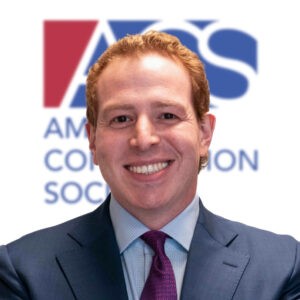
American Constitution Society President Phil Brest delivered these remarks as part of the organization's landmark 25th Anniversary celebration at the 2026 ACS National Convention Welcome Dinner on June 18, 2026, at the Omni Shoreham Hotel in Washington, DC.
Good evening, and welcome to the American Constitution Society’s 2026 National Convention.
I’m Phil Brest, the President of ACS. Whether you’re a first-time attendee or a long-time Convention goer, I’m thrilled you’re here.
For those I’ve not yet had the chance to meet, I stepped into this role in January, having spent the bulk of my professional career working on judicial nominations, including in the Senate and the Biden Administration.
I remain incredibly proud of the record 235 judicial confirmations amassed during the previous administration—something that could not have happened without the input and support of ACS—and particularly proud that it was the most demographically and professionally diverse slate of appointees ever assembled.
I’m humbled by the opportunity to lead ACS, and keenly aware of the opportunities and responsibilities of taking the helm at this moment in time.
ACS is celebrating our 25th anniversary this year, as the nation celebrates its 250th birthday. Tonight, I want to talk about what that means and why it matters.
Where we have come in 250 years as a nation and 25 as an organization, how reactionary forces threaten to pull us back to Founding Era America, and how we as a network can push this country beyond a status quo that has, simply put, failed us.
Thank You’s
Before I try to tackle those lofty subjects, however, I want to say a few thank you’s.
First and foremost, a tremendous thanks to the ACS staff for putting this event together. This truly was a team effort, and all of us in attendance here tonight are the beneficiaries of that effort. I’d ask that the ACS staff please stand so that we can recognize you.
A huge thank you as well to ACS’s Board, especially our Chair, Keith Harper, and our Chair-Elect, Michele Goodwin, as well as to ACS’s founder, Justice Peter Rubin of the Massachusetts Appeals Court.
I want to recognize the incredible staff of the Omni Shoreham Hotel for making all of this happen, and a particular shoutout to the Convention banquet servers, represented by Local 25.
I want to acknowledge our many sponsors who help make this event possible, including partner nonprofit organizations and law firms big and small.
I also want to recognize the many special guests gathered here: Federal and state judges and justices, academic luminaries, nonprofit leaders, and our three featured speakers tonight:
- Fatima Goss Graves, President & CEO of the National Women’s Law Center
- Janai Nelson, President and Director-Counsel of the Legal Defense Fund
- And a longtime friend of ACS, Senator Sheldon Whitehouse of Rhode Island.
Most importantly, I want to recognize our members in attendance tonight—the students, lawyers, academics, and judges who power our network.
In my first year as President, I’ve committed to visiting 100 ACS chapters. And in these first six months on the job, as I’ve traveled the country meeting with members, I’ve been filled with tremendous hope in what lies ahead for our values, our community, and our vision.
To the law students here tonight: You are the future of the progressive legal movement, and you have both the responsibility and the opportunity to transform the law into a force for good. I am more than confident you will continue to do so.
Common Threads
In a few short weeks, we’ll celebrate the nation’s 250th birthday.
And as we look back on those 250 years, we see certain through lines, certain common threads.
We see a country that started out as an improbable experiment. A country founded on the revolutionary principle that we could be a government, as Lincoln said, of the people, by the people, and for the people.
But we also see deeply imperfect systems and impaired structures and forces that have perpetuated and exploited those flaws. We see those who have wielded power for discriminatory ends, those who have used the Bill of Rights as a cudgel, and those who have turned a blind eye, misguided in their belief that they would never themselves become a target.
At the same time, we see progress in the face of obstacles. Coalitions of committed individuals willing to risk life, limb, and livelihood for the betterment of their families and neighbors and complete strangers. Those like tonight’s featured guests who keep on fighting, no matter the odds.
And we see immense promise. Promise rooted in shared values. Values that connect us, regardless of where we come from, how we worship, who we love, or what we look like. Values that are at the core of ACS’s identity, mission, membership, and purpose: Equal protection and due process, separation of powers and judicial independence, strength through diversity and the inherent dignity of all human beings.
Our story, then, is one of push and pull, of advance and retreat, of evolution and reversion.
And through it all, one thing has been clear: We have the power to change. The power to move forward, to not be held back by the faults of our past. In short: To progress.
And though we’re in a moment of considerable darkness, we are certainly not in a moment of retreat. Looking around this room leaves me profoundly hopeful that our collective push for progress will not be turned back. That we are all gathered here today, standing up for justice and truth in the face of forces that seek to dismantle our democracy and roll the clock back 250 years, is a testament to our resilience.
ACS’s Role and History
ACS’s story is intertwined with these historical throughlines, with this tug of war between moving forward and sliding back.
This organization began in large part as a response to the Supreme Court’s decision in Bush v. Gore and to the reality that conservative legal thought of the most extreme variety was dominating the courts and the law.
As then-Professor Rubin helped expand ACS from a single chapter at Georgetown to a national network, he emphasized our organization’s role in promoting core values that had, in his words, “largely been read out of American law through the ascendancy of various strands of legal thought over the last 20 years.”
And so, ACS stepped up to the plate:
- Bringing students together to share ideas and counter conservative legal orthodoxies.
- Hosting debates and programming that shaped the discourse on matters of law and policy.
- Promoting a vision of constitutional interpretation rooted in the values of democracy, liberty, and equality.
- Defending the rule of law, the separation of powers, equal protection, due process, judicial independence, and access to justice.
- Providing a platform for academics and practitioners on the most pressing topics of the day.
- Building pipelines of judges, law clerks, and others who breathe life into ACS’s values as they execute their critical work.
What propelled ACS’s nationwide expansion—and the work that ACS has done over the last two-and-a-half decades—is just as vital, relevant, and transformative today as it was 25 years ago.
The Threats We Face Today
Now I don’t want to minimize the threats and challenges we as a nation face 250 years after declaring independence.
Sitting here, on the eve of Juneteenth, in the middle of Pride Month, we must recognize and call out the many ways in which the forces of retrogression have, at least for the moment, succeeded.
Nowhere is this clearer today than in the efforts of those on the right to wipe out the political power of Black Americans.
Blessed by the Supreme Court, which claims to follow a colorblind Constitution but seems to favor red over blue and white over black, this Administration and its allies in federal and state government have worked in systematic fashion to dismantle decades of progress towards effectuating true political equality for people of color.
And as we know all too well, these actions did not occur in a vacuum.
In fact, the conservative majority’s opinion in Louisiana v. Callais gutting the Voting Rights Act—this evisceration of one of the nation’s greatest civil rights laws—was the culmination of a decades-long quest to return to an era where the ballot box was closed off to Americans who were told they deserved less than full participation in the democratic process.
Make no mistake: There is a reason that this Administration and this Court have waged war on the Voting Rights Act. The right to vote is the right that is preservative of all other rights. By attacking this fundamental bedrock of our democracy, this Court and Administration hope to undermine, if not outright eliminate, the other freedoms and protections that so many in this room have fought for.
We must also recognize how this administration, its allies, and the conservative legal movement have targeted the LGBTQ community, immigrant populations, workers, and women.
And, of course, how they have waged an unprecedented assault on our institutions, on civil society, and on democracy itself.
We should not discount the challenges that we face. Nor should we understate the emotional toll of this moment.
It’s difficult to stay motivated. It’s difficult to stay focused. It’s difficult just to exist.
If you feel this way, you’re not alone. There are no doubt countless others in this room who have felt those same pangs. And countless others in generations before who asked themselves the same question: How do I press on?
But we are here because the people who fought for our country—who fought to redress its many imperfections and finally deliver on its promise—never gave up.
And as we come together tonight in community, there are so many reasons to have hope.
Why Hope
I want to return to the common threads of progress and promise. It’s those through-lines that give me optimism.
Consider those who are standing up to these reactionary forces. Not just these past 18 months, but for decades.
Students and lawyers. Union members. Judges who refuse to back down and soldiers who refuse illegal orders. Conscientious, everyday citizens in Chicago and Los Angeles and Minneapolis who show up, day after day, for their neighbors. People who may never stand on a stage, or appear on cable news, or serve in Congress. But people who refuse to let their communities be attacked, who have decided to fight for the kind of America they believe in.
Consider, also, the leaders who refuse to back down.
Leaders like Janai Nelson, who we’ll hear from shortly. Janai has fought valiantly to defend the Voting Rights Act, and I know she will never give up that fight. I’m confident that 25 years from now, as we gather to celebrate ACS’s fiftieth anniversary, it will be thanks to the work of Janai and others that Callais will be a thing of the past and the right to vote will truly be inviolable.
Leaders like Fatima Goss Graves, who has been a steadfast advocate for women, girls, and families, and for the kinds of individual rights and freedoms that are central to ACS’s identity. I’m incredibly grateful that Fatima is here this evening and so proud that she will receive ACS’s Lifetime Achievement Award.
Leaders like Senator Whitehouse, who has been a champion for reform and accountability and who will never stop pushing for fairer courts, for a stronger democracy, and for removing money from politics.
Thank you again to the three of you for being such fearless leaders, for being here tonight, and for inspiring us.
Why ACS
I have one final reason for optimism.
It’s all of you. ACS members, supporters, and staff. Those who are committed to this organization, to leaning into our shared values, and to moving us beyond the established order.
It’s the fact that you are here tonight. It’s the fact that in the face of tremendous adversity and discord, you have doubled down on this network and the promise it holds.
Now, more than ever, I ask that you continue to stand strong with this community. Take the extra step: Mentor a student, join your local chapter, speak on a panel, volunteer at your polling place, pursue judicial office.
And yes, continue to provide financial support so that we can strengthen our network for years to come.
And here is what we will do together, the many ways that ACS will help move this nation forward.
- We’ll continue to invest in the people in this room—the students and practitioners, judges and professors—who make up the ACS network.
- We’ll continue to host the kind of programming that shines a light on the corrupt, illegal, unconstitutional, undemocratic, and frankly un-American actions of this administration and its allies.
- We’ll lean even more into content oriented around accountability, rebuilding, and moving beyond the status quo. That includes coordinated programming across chapters and with many partner organizations here tonight.
- We’ll continue to cultivate this next generation of legal talent, so that those coming of age at a time of profound disruption and decay will be best positioned to reshape our institutions and systems in ways that are truly transformational.
- We’ll continue to power constitutional change, rejecting a static vision of our founding document and breathing life into one that adapts to our present circumstances and guarantees the inherent dignity of all people living in our nation.
- And we’ll continue to lift up our shared values, to embrace diversity in all its forms, and to be unafraid to discuss and deal in the kind of power that will ensure our steps forward outnumber our steps back.
Closing
I want to close tonight with a quote from President Franklin Delano Roosevelt. In his first fireside chat of his second term, in March 1937, FDR addressed his proposal to expand the Supreme Court.
Now I share this not because of the Court reform element—though that is a conversation we need to have—but because it presents something of a unifying theory of the case for ACS—a way of melding together our programming and policy work, our pipeline building, our network, and our emphasis on how to use power for good.
“We have, therefore,” FDR said to the American people, “reached the point as a nation where we must take action to save the Constitution from the Court and the Court from itself. We must find a way to take an appeal from the Supreme Court to the Constitution itself. We want a Supreme Court which will do justice under the Constitution and not over it. In our courts, we want a government of laws and not of men.”
Thank you for being here tonight, thank you for being part of the American Constitution Society, and thank you for joining together to help propel us beyond the status quo, to transform the law into a force for good, and to power real, sustainable constitutional change.
ACS Network and Chapters, Constitutional Interpretation, Equality and Liberty, Federal courts, Federal Courts, Importance of the Courts, Judicial Nominations, Pipeline, Rule of Law, State Courts