



August 1, 2014
Private: Where Do We Go From Here: Civil Rights, Equality, and Class
Atiba R. Ellis, Dr. Martin Luther King Jr., economic inequality, Freedom Summer and Civil Rights Symposium, Lyndon Johnson, poverty, War on Drugs
by Atiba R. Ellis, Associate Professor, West Virginia University College of Law
*Noting the 50th anniversaries of Freedom Summer and the Civil Rights Act of 1964, ACSblog is hosting a symposium including posts and interviews from some of the nation’s leading scholars and civil rights activists.
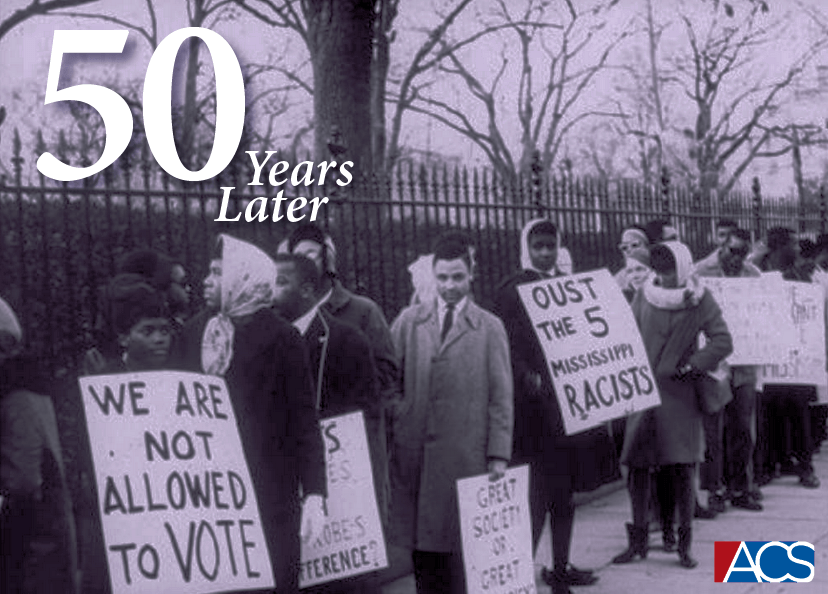
As we celebrate the fiftieth anniversary of the Civil Rights Act, and the fiftieth anniversary of the Freedom Summer protest, it is well worth reflecting on the how the movement challenged us to not only establish formal legal equality, but also to address enduring poverty. The Civil Rights Movement sought to persuade America that all Americans are equal. The Freedom Summer riders (and the many, many more who pressed for civil rights) sought to expose the inequality and oppression in the segregated south of 1964.
The passage of the Civil Rights Act, the Voting Rights Act, the Fair Housing Act, still impact us today. These enactments represent significant progress towards the goal of fostering equality. Moreover, with the contemporary tide of referenda and judicial rulings on marriage equality, the Civil Rights Movement continues to evolve to protect many people who fifty years ago weren’t deemed deserving of civil rights.
Though we think of Martin Luther King, Jr., Freedom Summer, and formal legal equality when we think about the Civil Rights Movement, we should also remember that the struggle is really, as historian Jacqueline Dowd Hall explained, a “long civil rights movement.” Hall’s work locates the genesis of the twentieth century movement in the 1930s with the social transformations that occurred due to economic disruption of the Great Depression. Moreover, the long arc of legal transformation to foster equality began with the Civil War and the Reconstruction Amendments. The civil rights struggle began with confronting the subordination and poverty slavery created.
In this sense, the long civil rights struggle had economic equality of opportunity at its core from the beginning. As Jeremy Leaming discussed on this blog, the question of racial equality in twenty-first century America is at a crossroads in light of retrenchment in civil and voting rights. Yet racial inequality and poverty walk hand and hand and continue to affect the lived experiences of people of color.
NPR host Michel Martin recently wrote an article in the National Journal, discussing the key obstacles that women of color continue to face in the twenty-first century. In discussing this article on NPR’s All Things Considered (where she called her essay her own “Letter from the Birmingham Jail”) she explained how poverty creates an enduring problem for racial minorities:
People of color particularly — but not exclusively blacks and Latinos — are connected to poverty and to disadvantage in ways that often our white colleagues don't understand. That causes you to have to think about things that they aren't thinking about. And that's the kind of thing that I really feel a need to call attention to.
Martin’s words -- especially as they reflect her own experience navigating the intersection of race and class-- remind us that poverty daily affects the lives of people of color, no matter how affluent. Indeed, it is a yet-to-be-fulfilled civil rights issue of the long civil rights movement.
President Lyndon Johnson saw it essential not only to establish formal civil and political rights during the 1960s civil rights legislative era, but also to fight the War on Poverty through establishing Medicaid and Head Start, among other programs. Moreover, in the wake of the riots of 1967, Johnson established the National Advisory Commission on Civil Disorders, popularly known as the Kerner Commission, to investigate the causes of the riots and to propose solutions. The Commission’s highly controversial report warned that America, despite its legislative innovations in civil rights, was becoming “two societies, one black, one white – separate and unequal.” The Commission recommended investment in housing and jobs that improved the conditions of African Americans, as well as the end of racial segregation in urban areas. Johnson ultimately ignored these recommendations.
Dr. King himself also saw that formal civil and political equality would be insufficient to truly integrate the African American community into American society. In his last book, Where Do We Go From Here: Chaos or Community (a synopsis), King argued that the next step to complete equality would be the abolition of poverty. He recognized that this would benefit the African American community specifically, but that it would also aid all Americans. King recognized that the long civil rights movement would rise or fall around questions at the intersection of racial equality and economic equality.
The “two societies” problem persists today and imperils our progress on civil rights. The War on Drugs and the growth of mass incarceration continue to impact largely urban, poor minority communities directly and disrupt their opportunities to grow beyond the underclass. The debates continue over the appropriate role for government in providing more or less substantial support through welfare, job training, education, and other supports to overcome poverty. While civil rights advocates argue for the growth of such programs, conservatives argue that these failings are attributable to dysfunctional lifestyles.
Our considerations of civil rights should be rooted in the recognition of the existence of a largely racialized political and economic underclass that suffers the brunt of the long history of racial subordination and poverty, and that cannot necessarily protect itself due to the narrow construction of the remedies surrounding race, and the near lack of remedies around class altogether. It follows that as we look forward to the twenty-first century phase of the long civil rights movement, we should not abandon race-conscious remedies, as the conservative Supreme Court majority and some commentators have suggested. Instead, race-conscious remedies should have an added focus on issues that address the specific intersections where the members of the racial and class underclass tend to be affected most. Though not the grand next step King envisioned, it would be a step in the right direction.
To take a law of democracy example: the intersection of race and class lies at the heart of the debates concerning the propriety of voter identification laws and expanded voting. As I have argued in earlier research, these laws affect those voters who may find it difficult to absorb the indirect economic costs of voting since these laws narrow opportunities and heighten the entry requirements for voting. And as political scientists Matthew Mendez and Christian Grose have shown, racial bias underlies support for these laws. Similarly, as scholars like Michelle Alexander have demonstrated, the crisis of mass incarceration has heightened the barriers of felon disenfranchisement and ultimately has excluded a large segment of African Americans and Hispanics from the franchise. These examples suggest that electoral vulnerabilities that affect minorities due to their poverty ought to be subjected to more significant judicial and legislative scrutiny. This is but one area where we can innovate concerning the problems that exist at the intersection of race and class.
Innovation of race conscious remedies in this era of civil rights enforcement will further the ultimate end of equality that was the point of the movement. By doing so through protecting the largely minority political and economic underclass, we will ultimately take one more step to promote the dignity and status of every citizen in America -- and come closer to fulfilling the vision of the long civil rights movement.
Civil rights, Democracy and Elections, Equality and Liberty, Racial Justice, Voting Rights