


June 13, 2026
Auto Draft
June 5, 2026
Molly Miller
April 22, 2026
March 17, 2026
Become a Poll Worker Today!
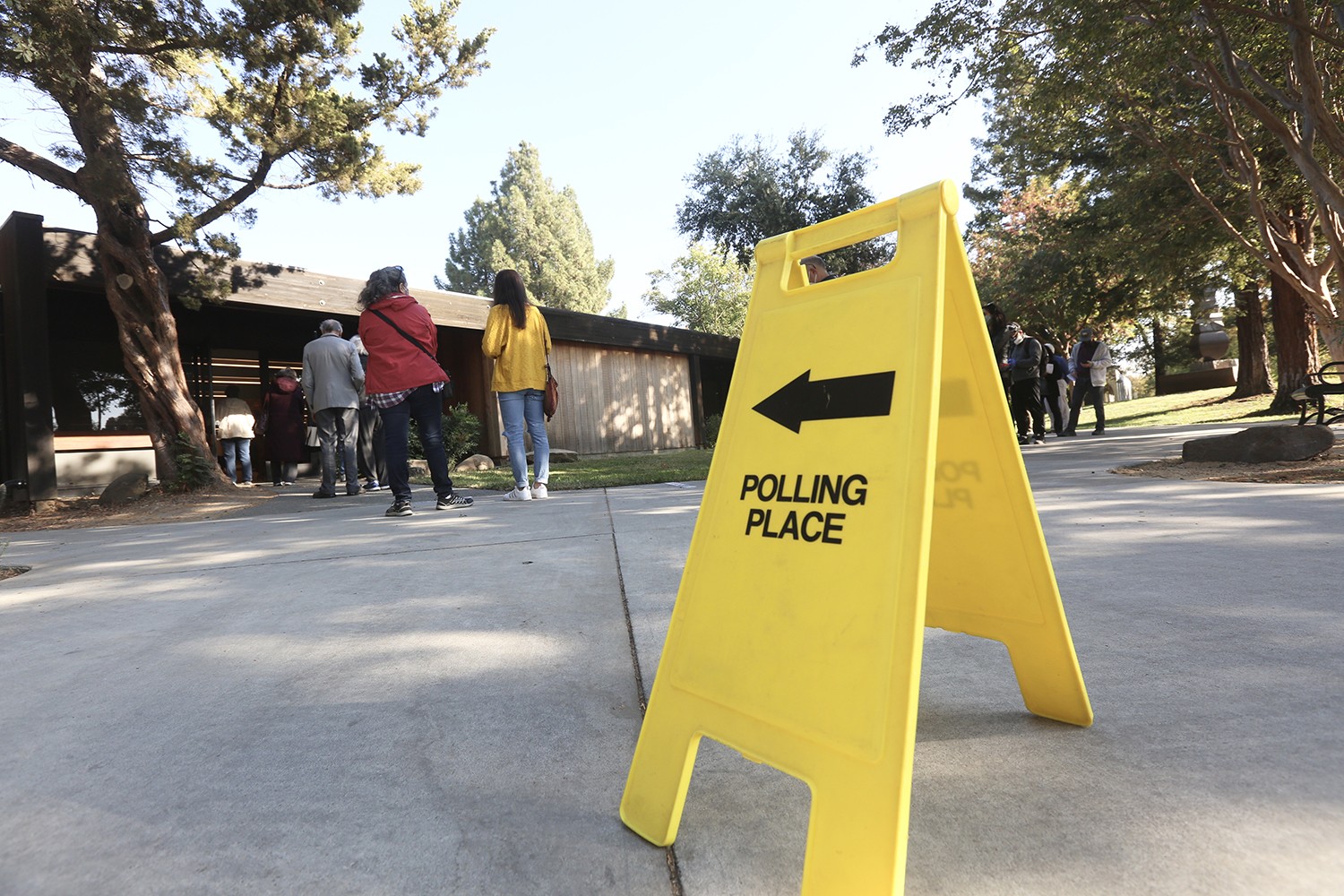
Are you wondering what you can do to help ensure that democracy prevails? One of the most impactful ways – during both the primaries and the general election – is to serve as a poll worker.
March 2, 2026
Director of Policy and Program
The Position:
The American Constitution Society (ACS), one of the nation's leading progressive legal organizations, seeks an experienced, creative, and detail-oriented Director to lead the Policy and Program Department’s rule of law efforts.
The Director’s portfolio will focus on legal efforts to defend and strengthen the rule of law, maintain the proper balance of power between the three branches of government, as well as between the federal government and the states, and includes work on administrative law and government accountability. The Director will work closely with other members of the Policy and Program Department to coordinate a unified, intersectional, and strategically coherent vision for ACS’s rule of law work. The position may be responsible for additional, substantive portfolios based on experience and interest.
The Director will play a central role in coordinating and facilitating ACS's substantive legal and public policy work in the areas described above and will:
- Work closely with constitutional scholars, practitioners, advocates, public officials, and law students to formulate and advance a progressive vision of the law that is intellectually sound, practically relevant, and faithful to our constitutional values.
- Serve as an expert voice by moderating and speaking on panels, providing substantive direction and support for other departments within ACS, representing ACS before relevant coalitions, authoring op-eds, blog posts, articles, and white papers related to ACS’s work, and responding to inquiries from the media.
- Work with outside experts on various ACS publications and projects.
- Develop and oversee execution of conferences, convenings, and other live programming.
Qualifications:
Applicants should possess a J.D. degree from an accredited law school and have four to seven years of professional experience. The ideal candidate will be familiar with constitutional and other legal scholarship, and have outstanding analytic, writing, and interpersonal skills.
ACS values a diverse workforce and an inclusive culture. ACS encourages applications from all qualified individuals without regard to race, color, religion, gender, sexual orientation, gender identity or expression, age, national origin, marital status, citizenship, disability, and veteran status.
Compensation and Benefits:
This position will report to the Vice President of Policy and Program. The successful candidate’s salary will be commensurate with relevant professional experience. The salary range for this position is $70,000 to $80,000.
ACS offers generous benefits, including: a 4-day work week schedule; health, vision, dental and life insurance; paid holiday, vacation, and sick leave.
Location:
ACS’s has a flexible remote work policy but this position is based in Washington, D.C. The Director may work hybrid in-office/remotely if they live in the Washington metropolitan area or remotely if they live outside that area with the expectation of occasional travel to Washington D.C., when necessary.
How to Apply:
Interested applicants should email a cover letter, resume, and writing sample of no longer than five pages to jobs@acslaw.org. No phone calls please.
July 9, 2025
December 17, 2020
Student Chapter Handbook
April 30, 2020
THE ENDURING PROBLEM OF THE RACE-BLIND REASONABLE PERSON
Scott B. Astrada, Adjunct Professor of Law at the Georgetown University Law Center
Marvin L. Astrada, Professor in the Politics & History Department at New York
University – Washington D.C.
It is not without a sense of irony that one of the most pressing internal challenges facing
the administration of justice today is its capacity to effectuate equal application and
protection of the law based on one its most fundamental historical pillars–i.e., reasonableness
as manifested in the reasonable person. In the context of constitutional law, and especially the
Fourth Amendment, the conceptualization of reasonableness is a lynch pin for the functioning of
law as a process, yet it also has the potential to be the most insidious form of injustice for people
of color and other marginalized communities. A recent Fourth Amendment case in South
Carolina, State v. Spears, reflects the contentious relationship between reasonableness, the
reasonable person, the criminal law, and race. 1 South Carolina Supreme Court Chief Justice
Donald Beatty’s dissent in Spears identifies the highly problematic nature of the foregoing vis-à-
vis the legal process. The Chief Justice’s observations resonate with an overarching problem that
reasonableness and the reasonable person pose in the criminal law, the legal process, and the
equal administration of justice.
Pitfalls of a “Reasonable Person” Analysis
In Spears, Eric Terrell Spears was indicted for trafficking crack cocaine. The trial court denied
Spears’ motion to suppress the evidence of the drugs seized by police on Fourth
Amendment grounds and he was subsequently convicted. 2 On review, the Supreme
Court of South Carolina held that there was sufficient evidence to support the trial
court's finding that Spears engaged in a consensual encounter with law enforcement,
and that Spears' subsequent actions created a reasonable suspicion that he may have
been armed and dangerous—justifying law enforcement's Terry frisk that led to the
discovery of the offending crack cocaine on Spears' person.
Chief Justice Beatty dissented, arguing that Spears was seized in violation of the Fourth
Amendment at the beginning of his interaction with the police officers, because a
reasonable person would not have felt free to terminate the encounter with law
enforcement. Furthermore, law enforcement did not have reasonable suspicion to justify
the seizure.
The threshold question of “whether Spears was seized . . . . hinge[d] on how a
reasonable person would perceive the encounter with law enforcement.” 3 While Chief
Justice Beatty acknowledged that Fourth Amendment jurisprudence does not take into
account explicitly “personal” characteristics such as race, sex, age, disability, and so
forth, when making this determination, he nonetheless states that “a true consideration
of the totality of the circumstances cannot ignore how an individual's personal
characteristics—and accompanying experiences—impact whether he or she would feel
free to terminate an encounter with law enforcement.” 4 The Chief Justice points out that,
“Scholars have examined ad nauseam the dynamics between marginalized
2
groups—particularly African-Americans—and law enforcement (Spears is an African-
American male).” 5 This context is indispensable to having a complete understanding to
the “totality of circumstances” for Fourth Amendment consideration. The Chief Justice
goes further to explain that, “‘For many members of minority communities . . . the sight
of an officer in uniform evokes a sense of fear and trepidation, rather than security.’
Moreover, ‘[g]iven the mistrust by certain racial, ethnic, and socioeconomic groups, an
individual who has observed or experienced police brutality and disrespect will react
differently to inquiries from law enforcement officers . . . .’ Unfortunately, under our
existing framework, this can result in the evisceration of Fourth Amendment protections
for many people of color.” 6
The Chief Justice also references a similar discussion by United States Supreme Court
Justice Sonia Sotomayor: “But it is no secret that people of color are disproportionate
victims of this type of scrutiny. For generations, black and brown parents have given
their children ‘the talk’—instructing them never to run down the street; always keep your
hands where they can be seen; do not even think of talking back to a stranger—all out
of fear of how an officer with a gun will react to them.” 7 Chief Justice Beatty also considers
the current Fourth Amendment jurisprudence in light of these concerns, stating that “In spite of
these academic findings and judicial observations, our current framework fails to
meaningfully consider the ways in which a person's race can influence their experience
with law enforcement. As a result, I fear minority groups are not always afforded the full
protections of the Fourth Amendment. Given the interests at stake, one would expect
our criminal justice system to forcefully resist marginalizing the experiences of people of
color by insisting on a ‘color-blind’ reasonable person standard.” 8
Revisiting Reasonableness & the Reasonable Person
In the singular context of this case, the Chief Justice’s dissent highlights the potential of legal
reasonableness and the reasonable person analysis to exacerbate the administration of injustice.
His analysis reveals how the historical conception of a “reasonable person” employed by the law
becomes a means of perpetuating a politics of racial/ethnic exclusion of the “Other,” i.e., a non-
white racial/ethnic subject. The Other is required to comport themselves as a reasonable person
that bears very little resemblance to their lived reality. This results in the “Other” being
constrained within a concept that excludes them by imposing the worldview, norms, values, etc.,
of a rendition of the reasonable person that is not reflective of their world. Spears demonstrates
that this is not merely an esoteric observation with scant applicability in the empirical world.
Historically, police signify a very different state of affairs for the “minority” subject than other
racial/ethnic subjects, which has a direct and indelible impact on what constitutes a reasonable
person in those communities.
Most concerning is the way in which cultural clashes fuel excessive verdicts and sentencing by
the very fact that the current rehabilitative justice model cannot readily incorporate non-Anglo
and non-Western European cultural, political, economic, and social norms and values, which
correlate, in large part, with the present day application of a non-representative reasonable
person. This is observed by Chief Justice Beatty when he states: “[s]pecifically, [Spears]
contended a seizure occurred because a reasonable person would not have felt free to walk away
3
from the initial encounter. Spears also contended the agents did not have a reasonable suspicion
to stop him. The State argued the encounter . . . was consensual and the agents therefore did not
need a reasonable suspicion to initiate the stop.” 9 Reason, reasonableness, and the reasonable
person are thus fraught with subjectivity and internal fragmentation.
In light of the changes that have transpired vis-à-vis the “People,” the question becomes whether
the concept of the reasonable person retains truth-value in the present time. 10 Emerging segments
of the population that were previously silenced and marginalized—silence informed and defined,
for example, by race, ethnicity, economic status, immigrant status, and gender—have prompted a
need to comprehensively reconsider the reasonable person and, by extension, reasonableness
within the law. 11 The “repressive” nature of the traditional reasonable person ablates the
subjective—the cultural traditions and histories that are not comprehended by the reasonable
person’s notion of reasonableness either drop out or are appropriated and redefined by the
dominant standard of reasonableness. Is the reasonable person simply “Everyman, an individual
without race, class, gender, or any other non-universal characteristics? Or is the reasonable
person someone who resembles the defendant herself, possessing some or all of the defendant's
characteristics?” 12
The reasonable person requires reevaluation because of its significant disconnect from the human
communities that are emplaced into the legal process. Examples of identity and experience that
muddy notions of reasonableness include: the relationship between police and certain racial
groups; the relationship and dynamic between male and female perspectives; the relationship
between transgender or gender nonconforming and cisgender identities; and the interplay
between religious and secular perceptions on values and norms.
If law’s purpose is to serve the People, the reasonable person in its present manifestation,
becomes less reflective of the population (particularly as demographic trends suggest Latinos
will become the numerical majority) and less legitimate. 13 The cultural superstructure upon
which the necessary illusion of reasonableness and the reasonable person rest is being divested of
the “universal” and “objective” (selective) scaffolding supporting a supposedly objective
interpretation of reasonableness. For example, as a society we are now more cognizant that an
undocumented community’s relationship with law enforcement creates a completely distinct
sense of reasonableness when analyzing Fourth Amendment searches and seizures than the
reasonableness of the same searches and seizures in an affluent, predominantly white suburban
community. 14
Jurisprudence, however, has been slow to keep up. In United States v. Smith, the defendant
argued, in asserting a Fourth Amendment claim, that "no reasonable person in his 'position'—as a
young black male confronted in a high-crime, high-poverty, minority-dominated urban area
where police-citizen relations are strained—would have felt free to walk away from the
encounter" with law enforcement officers. 794 F.3d 681, 687-88 (7th Cir. 2015). The Seventh
Circuit Court of Appeals acknowledged the relevance of race, “racial profiling, police brutality,
and other racial disparity in the criminal justice system . . . to the question of whether a seizure
happened” but concluded that such considerations were not dispositive. Id. at 688. The Tenth
Circuit Court of Appeals has concluded, contrarily, that race is an inappropriate consideration in
the reasonable person analysis, stating “there is no uniform way to apply a reasonable person test
4
that adequately accounts for racial differences consistent with an objective standard for Fourth
Amendment seizures” and therefore refusing to engage the entire enterprise. See United States v.
Easley, 911 F.3d 1074, 1081-82 (10th Cir. 2018), cert. denied, 2019 WL 1886117 (U.S. Apr. 29,
2019).
It is thus the case that the reasonable person, in its present manifestation, simulates and
disseminates an antiquated legal and sociocultural construct that acts to suppress the
sociocultural dynamics that stem from the configuration of the People as they are presently
constituted. The reasonableness of judgment and legality are divested of relevance in the present.
The continued use of the traditional reasonable person and its notion of reasonableness are part
of an ever-present past. The consequences are significant for the majority of legal subjects that
do not fit into the sociocultural basis of the traditional reasonable person.
1 State v. Spears, 839 S.E.2d 450 (S.C. 2020).
2 Id.at 454.
3 Id. at 463.
4 Id.
5 Id. (citations omitted).
6 Id. 463-64 (citations omitted).
7 Id. at 464 (citing Utah v. Strieff, 136 S. Ct. 2056, 2070 (2016) (Sotomayor, J., dissenting) (internal citations omitted); see also
Floyd v. City of New York, 959 F. Supp. 2d 540 (S.D.N.Y. 2013) (finding the City of New York liable for the New York Police
Department's stop-and-frisk policy, which violated plaintiffs' constitutional rights, and noting the racial disparities in the policy's
implementation)).
8 See Robert V. Ward, Consenting to a Search and Seizure in Poor and Minority Neighborhoods: No Place for a “Reasonable
Person,” 36 HOW. L.J. 239, 241 (1993) ("Because the reasonable person test assumes that a person's interactions with the police is
a generic experience, the test is biased.").
9 Spears, 839 S.E.2d at 453.
10 Symposium, The Reasonable Person: A Conceptual Biography in Comparative Perspective, 14 LEWIS & CLARK L. REV. 1233,
1234 (2010).
11 See e.g., Kimberle Crenshaw, Mapping the Margins: Intersectionality, Identity Politics, and Violence Against Women of Color,
43 STANFORD L. REV. 1241 (1991).
12 See Kevin Jon Heller, Beyond the Reasonable Man? A Sympathetic but Critical Assessment of the Use of Subjective Standards
of Reasonableness in Self-Defense and Provocation Cases, 26 AM. J. CRIM. L. 4 (1998-1999).
13 Symposium, supra note 17, at 1259-61. Similar concerns have arisen in the context of race. For example, the New Jersey
Supreme Court noted in Taylor v. Metzger: “Some courts have found that a particularly offensive remark, if not repeated, will not
be sufficient to establish a hostile work environment.” 706 A.2d 685 (N.J. 1998); see e.g., Bivins v. Jeffers Vet Supply, 873 F.
Supp. 1500, 1508 (M.D. Ala. 1994) (holding a co-worker’s one time use of a racial epithet insufficiently severe to establish a
hostile work environment), aff’d, 58 F.3d 640 (11th Cir. 1995); Reese v. Goodyear Tire & Rubber Co., 859 F. Supp. 1381, 1385,
1387 (D. Kan. 1994) (holding a manager insinuating that all black people abused drugs insufficiently severe to establish a hostile
work environment); Bennett v. N.Y.C. Dep’t of Corrs., 705 F. Supp. 979, 983 (S.D.N.Y. 1989) (concluding that corrections
officer’s remark, “hey black [expletive], open the . . . gate,” to another officer did not amount “to more than a mere episodic
event of racial antipathy” and was thus insufficient to sustain a claim of a racially hostile work environment); McCray v. DPC
Indus., 942 F. Supp. 288, 293 (E.D. Tex. 1996) (holding sporadic racial slurs by co-workers insufficiently severe to establish a
hostile work environment). Nevertheless, a single utterance of an epithet can, under particular circumstances, create a hostile
work environment. See e.g., Taylor, 706 A.2d 685. (RP 211-212)
14 See Ward, supra note 10, at 240-41.
February 29, 2020
February 2020: Kyle Strickland
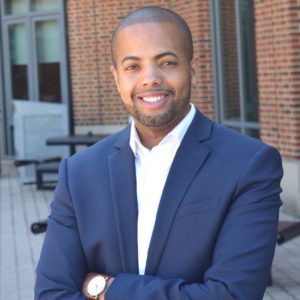
Kyle Strickland (he/him)
Member, ACS Columbus Lawyer Chapter Board of Directors
My name is Kyle Strickland, and I’m an attorney at the Kirwan Institute for the Study of Race & Ethnicity. At Kirwan, I analyze laws, policies, community structures, and interpersonal bias to understand their impact on marginalized populations, with an emphasis on communities of color. I fundamentally believe that we can’t solve the challenges facing our society without reckoning with our country’s legacy of racism and oppression, and how it continues to perpetuate inequities today.
Throughout much of our nation’s history, laws and policies have been explicitly used as a tool to exclude, exploit, and oppress marginalized communities. And although we have made tremendous progress over the years to right the wrongs of the past, we are in the midst of a sustained attack on public power, civil rights, and our democracy. At a time when there are those who abuse their power and use the law for nefarious practices, it is more important than ever that we come together as progressives to use the law as a force for inclusion and justice.
ACS provides a platform for progressive attorneys to fight back against attacks on our democracy and to promote a positive vision for laws and policies that improve people’s lives.
I’ve had the pleasure of being a member of the ACS community for the past six years. First, as a law student in the ACS Student Chapter at Harvard Law School, and now as an attorney on the executive board of the ACS Columbus Lawyer Chapter in my hometown of Columbus, Ohio. I’m grateful to be a part of an organization that is actively building a diverse network of progressive lawyers, judges, policymakers, and community leaders who are committed to building a more equitable and just society.
This work is hard and none of us can do it alone. Together, we must boldly stand up for our democracy, speak truth to power, and fight for a government that promotes justice, equality, and liberty for all.
Learn more about the Lawyers of ACS »
December 4, 2019
At a time when America has become more racially diverse, extreme residential segregation on the basis of race nonetheless persists. The cumulative effects of this segregation on people of color are profound. Research has consistently demonstrated that Black and Latinx people living in racially segregated communities, with the concentrated poverty that often accompanies such segregation, have limited life opportunities.[1] Residential segregation impacts access to quality education, employment opportunities, government services, and social capital. Residents of racially segregated communities also experience increased contact with the criminal legal system, one of the critical drivers of unequal opportunity in America. Although the nature of racism in housing continues to change, government housing policies continue to sustain racial segregation, often working to re-segregate communities that had managed to achieve some level of integration.
One troubling aspect of modern housing policy is the entanglement with societal assumptions about the criminality of people of color and the criminal legal system’s steady march toward mass criminalization. Mass criminalization has been defined as “the criminalization of relatively nonserious behavior or activities and the multiple ways in which criminal justice actors, norms, and strategies shape welfare state processes and policies.”[2] Many policymakers are acting on
[1] See e.g., Marguerite L. Spencer & Rebecca Reno, Kirwan Inst. for the Study of Race and Ethnicity, The Benefits of Racial and Economic Integration in our Education System: Why This Matters for our Democracy (2009) (discussing the ways in which socioeconomic and racial segregation decreases life opportunities); See Richard Rothstein, The Color of Law: A Forgotten History of How Our Government Segregated America 186–187 (2017) (discussing the fact that young Black people are more likely to live in poor neighborhoods than young White people); Sheryll Cashin, The Failures of Integration: How Race and Class are Undermining the American Dream 3 (2004).
[2] Devon W. Carbado, Blue-On-Black Violence: A Provisional Model of Some of the Causes, 104 Geo. L.J. 1479, 1487 (2016).
July 30, 2019
TRUST and Retaliation: The First Amendment and Trump’s Taxes
In the latest salvo in his longstanding bid to avoid disclosing his tax returns, President Trump has sued the House Ways and Means Committee, the New York Attorney General, and the New York tax commissioner. The federal suit, filed in Trump’s capacity as an individual citizen, argues that a recently enacted New York law, the TRUST Act, which authorizes the disclosure of state returns filed by certain federal officials to the House Ways and Means Committee, violates the First Amendment because it punishes Trump for his party affiliation and policies. It also claims that the Ways and Means Committee has no lawful purpose for receiving individual state tax returns and has relied instead on pretextual rationales. The suit relies heavily on allegations of pretextual purpose or motive. It alleges state legislators and the Ways and Means chair have conspired to retaliate against and punish Trump because he is a Republican and supports policies they dislike. However, in pursuing that claim, the president has a motive problem.
Trump and Unlawful Purpose
During his first two years, the president has had a virtual crash course on litigation focused on actual purpose and unlawful motives. His Muslim ban survived a legal challenge based in part on Trump’s expressions of bigotry against Muslims. However, Wilbur Ross, his Commerce Secretary, got crossways with the Supreme Court when the justices concluded Ross’s reasons for asking about citizenship in connection with the census were pretextual.
Trump is asking a federal court to invalidate the TRUST Act primarily on the ground that officials enacted the law for illicit retaliatory reasons. The complaint cites statements by legislators (and some anonymous sources cited by mainstream media) to support the claim that the law was passed as payback or punishment for Trump’s political affiliation and policy positions. In brief, he is invoking a motive or purpose argument similar to the one plaintiffs relied on in litigation against the administration.
The Law of Purpose
Questions of governmental motive have dominated some recent high-profile Supreme Court cases. In addition to the Muslim ban case, the Supreme Court has considered purpose or motive questions in cases involving alleged anti-religious animus in connection with refusals to make wedding cakes for same-sex couples and the display of a large Latin cross in Bladensburg, Maryland. Determining actual governmental purpose or motive is generally a difficult task. In most cases that is because, unlike President Trump, lawmakers and executive officials do not typically display their biases in tweets and other public statements. In many cases, courts have the difficult task of determining what actually produced the legislation or executive action under challenge.
The Supreme Court has not charted a clear path with regard to issues or pretext and motive. Indeed, its recent forays in this area are uneven. The Muslim ban survived despite very clear evidence of presidential bigotry. That likely had a lot to do with the deference courts show to executives in the realm of immigration rather than any real assessment of presidential purpose or motive. The Supreme Court actually admonished the president for his statements, effectively telling him that presidents can and have done better, but went on to credit his national security explanation all the same. In the wedding cake case, by contrast, the Court scoured the record for evidence of anti-religious bigotry. It found a couple of statements by officials that, when arguably taken out of context, could be characterized as evidence of bias. Concluding that the statements demonstrated animus against the baker owing to his religion, the Court invalidated a state agency order that the baker provide a wedding cake to the same-sex couple.
Proving Retaliation
What, then, should we make of the president’s claims of retaliatory motive or purpose? In his lawsuit, the president relies on what he claims is the TRUST Act’s “unlawful purpose” to punish him for his political affiliation and policies. As evidence of retaliatory purpose, the president points primarily to public statements by the Act’s sponsors and supporters. However, many of those statements expressed the idea that “no one is above the law.” Sponsors of the TRUST Act and other officials also referred to the president’s refusal to provide any information about his taxes as an occasion to insist on some official transparency in this area. In other words, the statements invoked Trump, but only as an example or impetus for tax return transparency.
As Trump’s lawyers are likely aware, courts do not generally look beyond the face of a law to determine whether it has a retaliatory or discriminatory purpose. That does not mean they will – or should – ignore the sort of explicit animus or bigotry Trump expressed in defending his Muslim ban. Moreover, where evidence of pretext is apparent in the record, courts are not shy about calling it out – as, again, Secretary Ross recently discovered. Trump’s complaint urges the court to adopt a broad motive inquiry when it comes to legislative purpose. That approach does not have a lot of support on the Court. In fact, in a case cited in the complaint, which focused on free exercise of religion, only two justices agreed that legislative statements were relevant.
As the Supreme Court said in United States v. O’Brien, which rejected a First Amendment challenge to a federal law banning destruction of draft cards during the Vietnam War, “It is a familiar principle of constitutional law that this Court will not strike down an otherwise constitutional statute on the basis of an alleged illicit legislative motive.” Like Trump, O’Brien relied on statements by various legislators who were opposed to the viewpoints of draft opponents and the optics of draft card burning during the war. The Supreme Court concluded that the law, which on its face regulated the act of destroying government records and not speech, did not violate the First Amendment. Other decisions have also expressed heavy skepticism that courts can derive a single purpose or motive from the statements of members in large and diverse legislative bodies.
The TRUST Act itself does not single out the president or his state returns. It applies to the vice president and other federal officials as well. The Act does not explicitly regulate political affiliation of political speech. Since the Act has not yet been invoked or enforced Trump cannot claim officials have used it to target either Republicans or Democrats. None of the statements cited in the complaint target Trump’s party affiliation or specific policies. Indeed, it is the complaint that points to political affiliation. It suggests that since the defendants are all Democrats, he had established discriminatory purpose. That argument would lead to the absurd conclusion that any law enacted by members of a body dominated by one political party violates the First Amendment if enforced against a speaker belonging to a different party. Evidence of retaliatory purpose in First Amendment cases requires a much more specific showing – for example, that the government has fired someone, or taken some other action against them, because of their political associations or speech.
It is true, as alleged in the complaint, that New York’s legislature passed the TRUST Act in the wake of the administration’s refusal to comply with the House committee’s subpoena for Trump’s tax returns. It is also true that some, perhaps even more than a few, federal and state legislators dislike Donald Trump and may wish to embarrass him through release of his tax returns. However, as noted, the timing of the law and its political climate are not likely enough to establish that the actual purpose of the state law was and is to retaliate against Trump for his speech and associational activities. To give an example, very few jurisdictions had laws on the books regulating or banning protests near the funerals of U.S. veterans killed in action prior to the time members of the Westboro Baptist Church started organizing such protests. Yet the fact that today nearly all jurisdictions have some type of law or regulation concerning this practice does not mean they all violate the First Amendment. So long as the laws are neutral on their face, courts will not generally delve into the legislative motive for enacting them.
In the case of Trump’s tax returns, speculation has been rampant about what the documents might reveal. There are valid transparency, emoluments, and other law and order concerns at stake, particularly as they relate to a president with questionable business dealings – including some reportedly involving Russian officials. Even if the purpose of the TRUST Act is to aid the House Ways and Means Committee in obtaining Trump’s returns, that alone does not establish the state law was a form of payback for Trump’s party affiliation or political expression.
As indicated, the Supreme Court has not always been consistent with regard to motive or purpose inquiries. Despite its strong statements in cases like O’Brien, in another line of cases it has held that if a challenger can muster some evidence of discriminatory enforcement or enactment, then courts may inquire whether the legislature would have enacted or enforced the law anyway, for legitimate reasons. Even under that approach, assuming there is evidence of retaliatory purpose, New York’s legislature could readily point to the above concerns as grounds for answering that question in the affirmative.
If the point of the lawsuit is to show that New York legislators and executive officials do not like the president, the complaint seems hardly necessary. If that were sufficient to prove illicit purpose and invalidate any state or federal law, the president’s lawyers and the courts might quickly be overwhelmed. The president’s attempt to turn the tables by accusing the defendants of unlawful animus is likely to fail.