First Amendment

  • October 7, 2011

    by Jeremy Leaming

    The nation lost more than a visionary corporate leader this week, but a towering figure of the civil rights movement, the Rev. Fred L. Shuttlesworth.

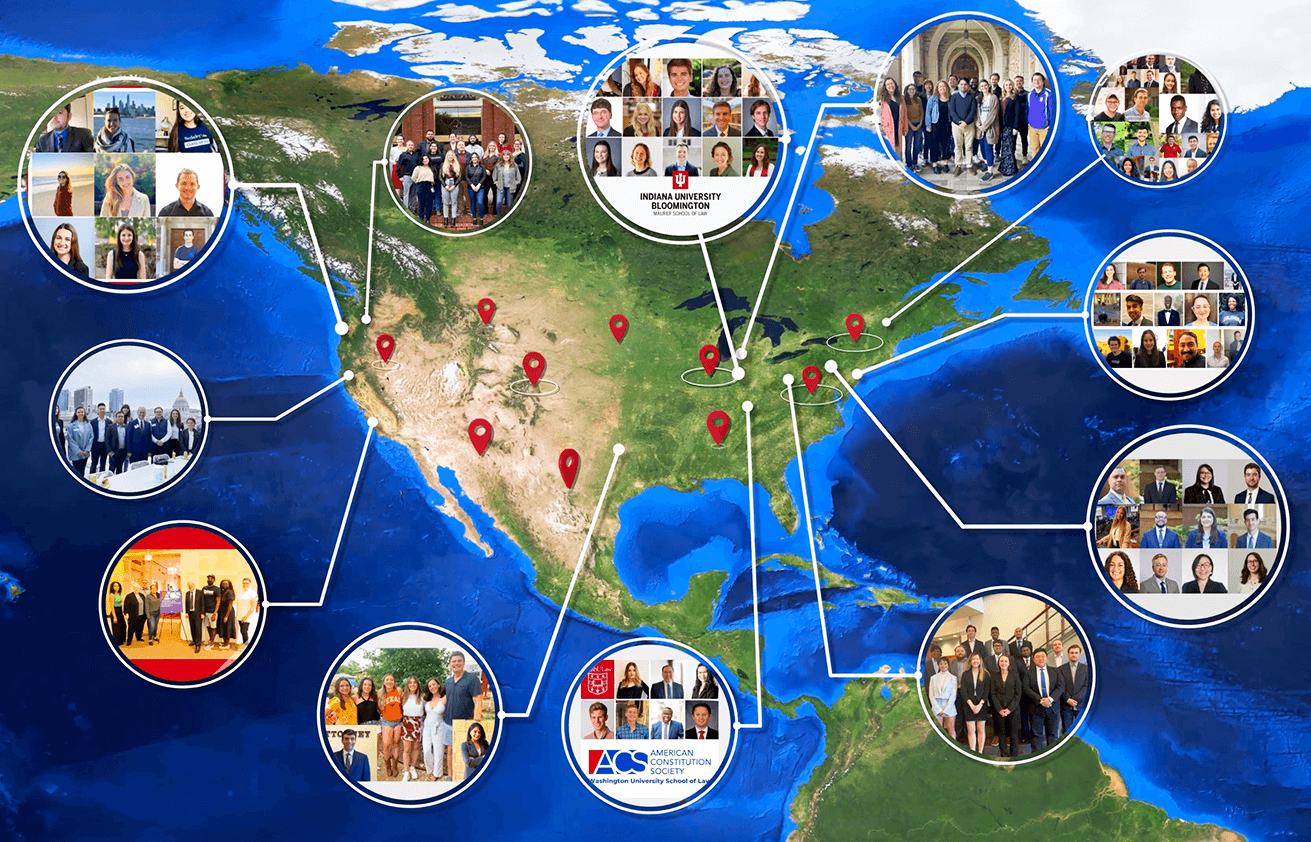
    The New York Times notes, Shuttlesworth, who died at 89 on Oct. 5 in Birmingham, Ala., was a “storied civil rights leader who survived beatings and bombings in Alabama a half-century ago as he fought alongside the Rev. Martin Luther King, Jr.” (Shuttlesworth is pictured, third from right, with former members of the ACS Student Chapter at Stanford Law School.)

    In Birmingham in 1963, the newspaper continues, “Shuttlesworth, an important ally of Dr. King, organized two tumultuous weeks of daily demonstrations by black children, students, clergymen and others against a rigidly segregated society.”

    The brutality unleashed against the demonstrators led by the city’s racist “public safety commissioner” Bull Connor helped “galvanize the nation’s conscience,” and along with other tragic events helped lead to the passage of the Civil Rights Act and Voting Rights Act.

    Diane McWhorter, author of Carry Me Home, told The Times, “Among the youthful ‘elders’ of the movement, he was Martin Luther King’s most effective foil; blunt where King was soothing, driven where King was leisurely, and most important, confrontational where King was conciliatory – meaning, critically, that he was more upsetting than King in the eyes of the white public.”  

  • September 29, 2011
    BookTalk
    Taking Liberties
    The War on Terror and the Erosion of American Democracy
    By: 
    Susan N. Herman

    By Susan N. Herman, president of the American Civil Liberties Union and Centennial Professor of Law at Brooklyn Law School


    The 10th anniversary of 9/11 may be over, but let’s not move on too fast. As students and fans of the Constitution, many of us have spent time deploring how the “War on Terror” has jeopardized our rights. Now it’s time to deepen that conversation and get serious about reversing the damage.  

    The news is not all bleak. The past decade offers some reassuring evidence of the power and resilience of our Constitution. My new book, Taking Liberties: The War on Terror and the Erosion of American Democracy, discusses a number of ways in which the Constitution’s multiple interlocking layers of self-protection have worked to limit the extent of the damage done. 

    For example, the right to trial by jury enabled an Idaho jury to honor the First Amendment by rejecting the federal government’s attempt to prosecute graduate student Sami al-Hussayen for posting links on a website.  

    Article III’s decision to insulate federal judges empowered some principled judges to test politically driven strategies against the Constitution. Judge Victor Marrero in the Southern District of New York, for instance, found that the absolute and permanent gag orders automatically attaching to National Security Letters violated the First Amendment, because they prevented recipients of these government demands from ever telling anyone – including Congress, a lawyer, or a court – anything about their own experiences.    

    Freedom of the press enabled reporters to tell the public things the government was trying to conceal – as in James Risen and Eric Lichtblau’s New York Times story revealing the long-secret and illegal NSA surveillance program, and Barton Gellman’s Washington Post exposé on the use of National Security Letters.

  • September 29, 2011
    Guest Post

    By Wendy Kaminer, author, lawyer and civil libertarian. Ms. Kaminer is the author of I’m Dysfunctional, You’re Dysfunctional, and was awarded a Guggenheim Fellowship in 1993. This post was first published at the Atlantic.com.  


    Religious institutions can sidestep workplace discrimination laws when it comes to hiring and firing clergy. But what about more secular employees, such as teachers and office administrators?

    Religious organizations enjoy essential and generally uncontested immunity from anti-discrimination laws in hiring and firing clergy according to religious doctrine: The Catholic Church isn't liable for refusing to ordain women anymore than a Church of White Supremacy would be liable for refusing to ordain blacks. But the scope of this exemption from employment laws, known as the "ministerial exception," is hotly contested. Does it automatically apply to employees other than clergy -- to parochial school teachers or administrators and others that religious employers might describe as important religious functionaries? That question is before the Supreme Court this term in Hosanna-Tabor v EEOC, scheduled for argument on October 5th.

    The legal context for this case is a recurrent conflict between the constitutionally protected autonomy of religious institutions and their obligation to comply with generally applicable secular laws, enacted in the interests of general public welfare and, in this case, equal employment rights. The Supreme Court has addressed this conflict before: in Boerne v Flores, it struck down federal legislation effectively expanding religious exemptions from federal, state, and local laws. In Employment Division v Smith (the case that gave rise to the law at issue in Boerne), the Court held that Native Americans who ingested peyote sacramentally were not exempt from state drug laws (and could, therefore, be denied unemployment benefits when fired for using peyote.)

    But Smith addressed individual practices associated with a minority faith (practices criminalized and demonized by the war on drugs.) Hosanna-Tabor involves the governance of mainstream religious institutions. Whether and how much that factual distinction matters will help determine the scope of the "ministerial exception" and the rights of hundreds of thousands of employees in religious organizations, especially Cheryl Perich, a former teacher at Hosanna-Tabor Evangelical Lutheran Church and School.

  • September 27, 2011

    by Jeremy Leaming

    The Roberts Court, some commentators have noted, appears to side more often than not with corporate interests, and has altered precedent on pleading standards that make it much easier for judges to dismiss civil complaints – think Bell Atlantic Corp. v. Twombly and Ashcroft v. Iqbal. The Supreme Court also has weakened the ability of people to band together to challenge malfeasance of large corporations, see Wal-Mart v. Dukes and AT&T v. Concepcion.

    A new ACS Issue Brief explores another avenue to the courthouse that the Roberts Court is narrowing, involving the ability of people to challenge unconstitutional government support of religion.

    The First Amendment’s establishment clause requires that government act with neutrality toward religion, meaning a certain amount of separation between government and religion is a must. But, according to the ACS Issue Brief, the ability of people to bring constitutional challenges to government action supporting or advancing religion is becoming increasingly difficult.

    In “The Slow, Tragic Demise of Standing In Establishment Clause Challenges,” Willamette University law school professor Steven K. Green writes, “By deciding not to decide certain classes of challenges, courts will effectively be throwing Establishment Clause questions … to the politically elected branches. Political expediency, rather than constitutional fealty, will become the rule of law, and Justice Robert Jackson’s immortal statement about withdrawing questions of constitutional rights from ‘the vicissitudes of political controversy’ and placing them ‘beyond the reach of majorities and officials’ will be stood on its head.”

    Green notes that in its 1968 Flast v. Cohen opinion, the Supreme Court upheld the right of taxpayers to challenge “government expenditures where the litigant could demonstrate a connection between the legislative action authorizing the expenditure and the purported constitutional violation. As a result of Flast, any taxpayer could allege that a legislative appropriation on behalf of religion violated the Establishment Clause, regardless of her own connection to the entity or institution receiving the government funds.”

  • September 21, 2011
    Guest Post

    By Rebecca Smith, Coordinator, Immigrant Worker Justice Project, National Employment Law Project


    For more than two centuries, especially in times of national political and economic upheaval, disenfranchised populations have taken to the streets and sidewalks to find jobs and to demand change. During that same period, it has been those most marginalized who have defended the bedrock right to free speech guaranteed by the First Amendment. So it is fitting that day labor groups have achieved a reaffirmation of this Constitutional and human right in a recent opinion from the U.S. Court of Appeals for the Ninth Circuit.

    Every day, some 200,000 workers search for day labor jobs or work as day laborers across the country. Just like the residents of Hoovervilles in the Great Depression, day laborers have become a symbol of much that is wrong with our society and economy – a national trend of reliance on a “just-in-time” workforce, where jobs are subcontracted out to the lowest bidder who pay rock-bottom (and often sub minimum) wages, and a reflection of a broken immigration system that excoriates those who are its victims. In today’s economic and political climate, day laborers are the quintessential example of jobless members of our society who most need the sidewalks to communicate.

    For prospective employers, day laborers fill a niche labor market for which there is huge demand – as landscapers, household workers and home repair experts for urban and suburban families and businesses. For the workers themselves, day labor presents a daily opportunity to avoid destitution and a potential to make the transition to a more stable job.

    Just like the Wobblies of a century ago – who engaged in free speech struggles up and down the Pacific Coast as they organized hobo workers – day laborers have become targets for those who would suppress their presence and their speech. Along with many cities nationwide, the city of Redondo Beach, Calif. passed an ordinance broadly outlawing solicitation of employment, business or contributions on city streets and sidewalks, citing supposed concerns about traffic safety and traffic flow. In 2004, the city began the Day Labor Enforcement Project. Undercover officers arrested dozens of day laborers.

    But as we all know, the First Amendment protects speech regardless of the popularity of its content or its messenger. The workers sued to stop the arrests and uphold their right to search for work in public spaces. Last week, on the eve of Constitution Day, a full eleven-member panel of the Ninth Circuit held in the workers’ favor. In no uncertain terms, the Court said: “We agree with the day laborers that the Ordinance is a facially unconstitutional restriction on speech.” Guided by “well-established principles of First Amendment law,” the Court confirmed that day laborers have a Constitutional right to gather in public places and communicate their need for work.